Introduction
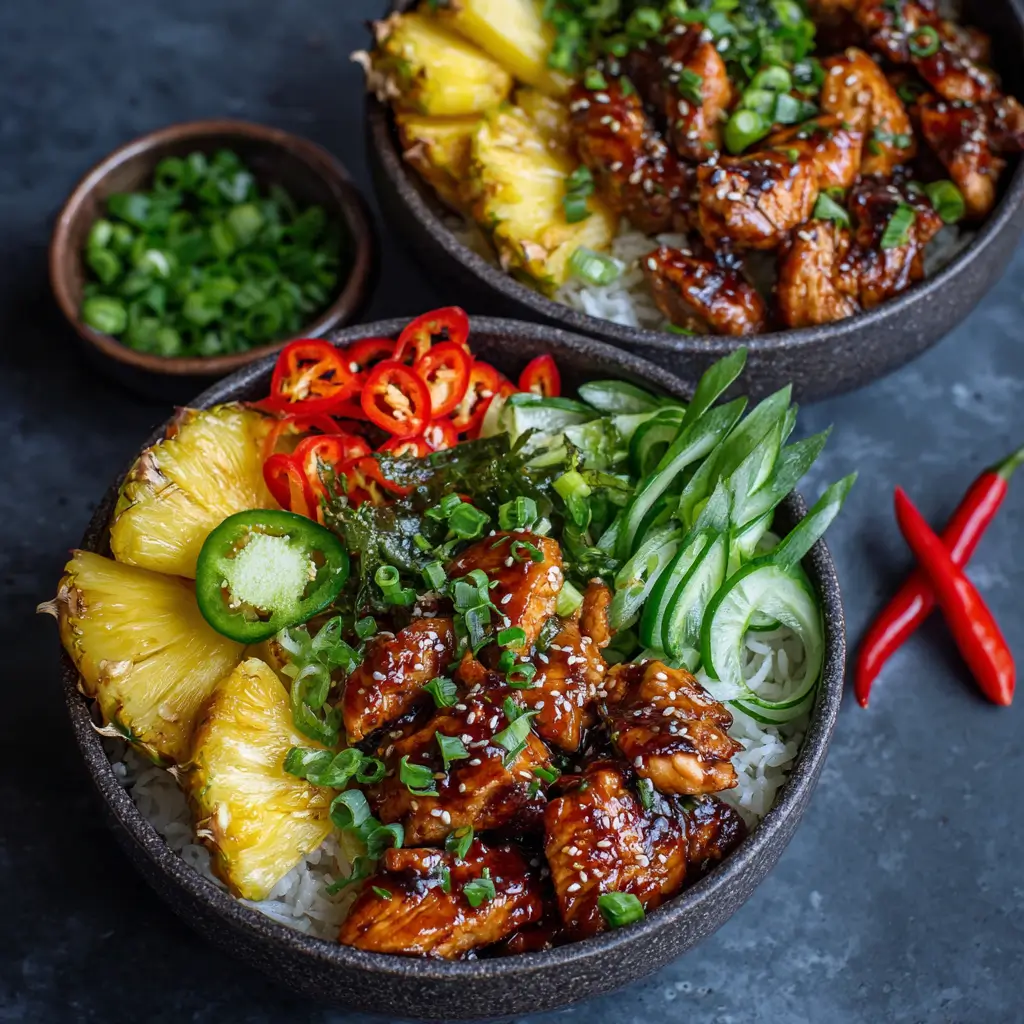
Teriyaki Chicken Pineapple Bowls are a vibrant, flavor-packed meal that brings together the savory-sweet magic of Japanese-inspired teriyaki sauce with the tropical freshness of pineapple. Perfect for busy weeknights or a healthy weekend dinner, these bowls combine tender, glazed chicken, juicy pineapple chunks, and a colorful array of vegetables over a bed of fluffy rice. Not only is this dish visually stunning and bursting with umami and tang, but it’s also balanced, nutritious, and endlessly customizable to suit your taste buds. Whether you’re cooking for one or feeding the whole family, Teriyaki Chicken Pineapple Bowls deliver restaurant-quality flavors in the comfort of your own kitchen.
The History
The roots of teriyaki trace back to Japan, where “teri” means luster (from the glossy sheen of the sauce) and “yaki” refers to grilling or broiling. Originally, teriyaki was a cooking technique used to glaze fish like salmon or mackerel with a mixture of soy sauce, mirin, and sugar before grilling it to create a beautiful caramelized finish. Over time, as Japanese cuisine spread globally, the method evolved and began being applied to other proteins—especially chicken. In the mid-20th century, American-Japanese fusion cuisine popularized dishes like teriyaki chicken, often incorporating non-traditional ingredients such as pineapple, bell peppers, and broccoli. This sweet and tangy twist became especially prominent in Hawaiian and mainland U.S. interpretations, leading to modern favorites like Teriyaki Chicken Pineapple Bowls—a harmonious blend of East Asian flavors and tropical island influences.
Ingredients Breakdown
The beauty of Teriyaki Chicken Pineapple Bowls lies in their balance of textures and flavors, achieved through carefully selected ingredients:
- Chicken Breast or Thighs: Lean chicken breast offers a mild, protein-rich base, while thighs provide richer flavor and tenderness due to higher fat content.
- Fresh Pineapple: Adds natural sweetness and a juicy pop that complements the salty-sweet teriyaki sauce. Fresh is best for optimal texture and enzyme content.
- Homemade Teriyaki Sauce: A mix of soy sauce (or tamari for gluten-free), rice vinegar, honey or brown sugar, fresh ginger, garlic, and a touch of sesame oil. Cornstarch slurry thickens it into a glossy glaze.
- Brown or White Rice: Serves as the hearty foundation. Brown rice adds fiber and nuttiness; white rice provides a softer, more traditional pairing.
- Vegetables: Bell peppers (red, yellow, or orange), red onion, snap peas, carrots, and broccoli offer color, crunch, and nutrients.
- Garnishes: Sesame seeds, sliced green onions, and chopped cilantro enhance aroma and presentation.
- Optional Additions: Edamame, mushrooms, avocado, or a drizzle of sriracha mayo for heat and creaminess.
Using high-quality, preferably organic ingredients ensures maximum flavor and nutritional value.
Step-by-Step Recipe
- Prepare the Rice: Rinse 1 cup of rice under cold water until the water runs clear. Combine with 2 cups of water in a saucepan. Bring to a boil, reduce heat to low, cover, and simmer for 18–20 minutes (white rice) or 40–45 minutes (brown rice). Remove from heat and let it steam, covered, for 10 minutes. Fluff with a fork before serving.
- Make the Teriyaki Sauce: In a small saucepan, whisk together ½ cup soy sauce, ¼ cup water, 3 tablespoons honey (or brown sugar), 2 tablespoons rice vinegar, 1 tablespoon grated fresh ginger, 3 minced garlic cloves, and 1 teaspoon sesame oil. In a separate bowl, mix 1 tablespoon cornstarch with 2 tablespoons cold water to make a slurry. Bring the sauce to a gentle simmer over medium heat, then stir in the slurry. Cook for 3–5 minutes, stirring constantly, until thickened and glossy. Remove from heat and set aside.
- Cook the Chicken: Cut 1.5 lbs of boneless, skinless chicken into 1-inch cubes. Season lightly with salt and pepper. Heat 1 tablespoon of neutral oil (like avocado or canola) in a large skillet or wok over medium-high heat. Add chicken and cook for 5–7 minutes, turning occasionally, until golden brown and cooked through (internal temperature 165°F). Remove and set aside.
- Sauté the Vegetables: In the same pan, add another teaspoon of oil if needed. Toss in 1 diced red bell pepper, 1 cup sliced snap peas, ½ diced red onion, and 1 cup small broccoli florets. Stir-fry for 4–5 minutes until crisp-tender. Add ¼ cup matchstick carrots in the last minute for color and crunch.
- Combine Chicken and Sauce: Return the cooked chicken to the pan with the vegetables. Pour in about ¾ of the prepared teriyaki sauce. Stir well to coat everything evenly. Simmer for 2–3 minutes to let the flavors meld and the chicken absorb the glaze.
- Add Pineapple: Gently fold in 1.5 cups of fresh pineapple chunks. Heat through for 1–2 minutes—do not overcook to preserve the fruit’s juiciness.
- Assemble the Bowls: Divide the cooked rice among four bowls. Top generously with the teriyaki chicken and pineapple mixture. Drizzle with extra teriyaki sauce if desired.
- Garnish and Serve: Sprinkle each bowl with toasted sesame seeds, sliced green onions, and fresh cilantro. Optionally, add a few edamame beans or avocado slices for extra creaminess.
Tips
- Use Fresh Ingredients: Fresh ginger and garlic elevate the sauce far beyond powdered versions. Grate them finely for even distribution.
- Don’t Overcook the Pineapple: Adding it at the end preserves its shape and prevents it from turning mushy.
- Thicken Sauce Properly: Always use a cornstarch slurry and simmer the sauce until it coats the back of a spoon for that signature glossy finish.
- Marinate for Extra Flavor: For deeper taste, marinate chicken in half the teriyaki sauce for 30 minutes before cooking.
- Prep Ahead: Chop all vegetables and make the sauce in advance. Store separately in the fridge for quick weeknight assembly.
- Avoid Burning: Keep the heat at medium-high when cooking chicken and sauce—high heat can cause sugar in the teriyaki to burn.
- Double the Sauce: Make extra teriyaki sauce and store it in an airtight container in the refrigerator for up to two weeks. It’s perfect for stir-fries, marinades, or dipping.
- Toasting Sesame Seeds: Lightly toast sesame seeds in a dry pan for 1–2 minutes until golden for a nuttier flavor.
Variations and Customizations
This recipe is highly adaptable to dietary needs and flavor preferences:
- Vegetarian/Vegan: Replace chicken with tofu, tempeh, or seitan. Use maple syrup instead of honey and ensure soy sauce is vegan (most are).
- Gluten-Free: Substitute regular soy sauce with tamari or a certified gluten-free soy sauce. Check all labels to ensure no hidden gluten.
- Low-Sugar: Reduce or replace honey with monk fruit sweetener or stevia. Use reduced-sodium soy sauce and limit added sugars.
- Spicy Version: Add a teaspoon of sriracha, chili garlic paste, or red pepper flakes to the teriyaki sauce. Garnish with sliced jalapeños.
- Keto-Friendly: Skip the rice and serve over cauliflower rice. Use a sugar-free teriyaki sauce made with coconut aminos, erythritol, and xanthan gum.
- Protein Swaps: Try shrimp, salmon, or thinly sliced beef (like flank steak) instead of chicken.
- Grain Alternatives: Use quinoa, farro, or wild rice blend for different textures and nutrient profiles.
- Extra Veggies: Incorporate zucchini, mushrooms, baby corn, or bok choy for variety.
- Fruit Variations: Swap pineapple with mango or peaches for a different tropical flair.
- Nutty Crunch: Top with crushed cashews or peanuts for added texture.
Health Considerations and Nutritional Value
Teriyaki Chicken Pineapple Bowls can be a wholesome, balanced meal when prepared mindfully:
- Protein: Chicken provides lean protein essential for muscle repair and satiety. One serving delivers about 30–35g of protein.
- Carbohydrates: Rice is the main carb source. Brown rice adds complex carbs and fiber (about 3–4g per serving), aiding digestion and blood sugar control.
- Fats: Minimal added fats if using lean chicken and minimal oil. Sesame oil contributes heart-healthy monounsaturated fats.
- Vitamins & Minerals: Pineapple contains vitamin C and bromelain (an enzyme with anti-inflammatory properties). Bell peppers are rich in vitamin A and antioxidants. Broccoli provides vitamin K and folate.
- Sodium Watch: Soy sauce is high in sodium. Opt for low-sodium versions and control portion sizes. A typical serving may contain 800–1000mg sodium—adjust based on dietary needs.
- Sugar Content: Honey and pineapple contribute natural sugars. A standard serving has about 15–20g total sugar. Reduce sweeteners for lower sugar intake.
- Calories: Approximately 500–600 calories per bowl, depending on ingredients and portion size. Can be adjusted by reducing rice or increasing vegetables.
- Digestive Benefits: Bromelain in pineapple may aid protein digestion and reduce bloating.
This dish supports balanced macronutrient intake and can fit into various eating patterns, including Mediterranean, flexitarian, or portion-controlled diets.
Ingredients
- 1.5 lbs boneless, skinless chicken breasts or thighs, cubed
- 1 cup uncooked brown or white rice
- 1.5 cups fresh pineapple chunks (cut from ½ medium pineapple)
- 1 red bell pepper, sliced
- 1 cup snap peas, trimmed
- ½ red onion, thinly sliced
- 1 cup broccoli florets
- ¼ cup matchstick carrots
- 2 tbsp neutral cooking oil (avocado, canola, or vegetable)
- 2 green onions, sliced
- 1 tbsp sesame seeds, toasted
- ¼ cup fresh cilantro, chopped (optional)
For the Teriyaki Sauce:
- ½ cup soy sauce (or tamari for gluten-free)
- ¼ cup water
- 3 tbsp honey (or maple syrup for vegan)
- 2 tbsp rice vinegar
- 1 tbsp freshly grated ginger
- 3 garlic cloves, minced
- 1 tsp sesame oil
- 1 tbsp cornstarch
- 2 tbsp cold water (for slurry)
Directions
- In a medium saucepan, rinse and cook rice according to package instructions. Set aside once done.
- To make the teriyaki sauce, combine soy sauce, water, honey, rice vinegar, ginger, garlic, and sesame oil in a small saucepan. Whisk well.
- In a separate bowl, mix cornstarch with 2 tablespoons cold water to form a smooth slurry.
- Place the saucepan over medium heat and bring the mixture to a gentle simmer. Stir in the cornstarch slurry and continue cooking for 3–5 minutes, stirring constantly, until the sauce thickens and becomes glossy. Remove from heat and set aside.
- Heat 1 tablespoon of oil in a large skillet or wok over medium-high heat. Add chicken cubes, season lightly with salt and pepper, and cook for 5–7 minutes until golden and cooked through. Transfer to a plate.
- Add remaining oil to the pan if needed. Stir in red bell pepper, snap peas, red onion, and broccoli. Cook for 4–5 minutes until vegetables are bright and slightly tender.
- Return chicken to the pan. Pour in ¾ of the teriyaki sauce and stir to coat. Simmer for 2 minutes.
- Add pineapple chunks and gently stir to combine. Warm through for 1–2 minutes.
- Divide rice among four serving bowls. Top with the teriyaki chicken and pineapple mixture.
- Drizzle with additional teriyaki sauce if desired. Garnish with green onions, sesame seeds, and cilantro.
- Serve immediately and enjoy!
FAQ
Can I use frozen pineapple?
While possible, fresh pineapple is strongly recommended for better texture and flavor. Frozen pineapple can become watery when thawed and may dilute the sauce.
How long do leftovers last?
Store in an airtight container in the refrigerator for up to 4 days. Reheat in a skillet or microwave, adding a splash of water or extra teriyaki sauce to refresh moisture.
Can I freeze this dish?
Yes, but without the rice. Freeze the teriyaki chicken and pineapple mixture for up to 3 months. Thaw overnight and reheat gently. Cook fresh rice when ready to serve.
Is this recipe kid-friendly?
Absolutely! The sweet-savory flavor profile appeals to children. Dice ingredients smaller and serve with fun chopsticks or skewers for picky eaters.
What can I use instead of rice?
Cauliflower rice, quinoa, soba noodles, or zucchini noodles are excellent alternatives for low-carb or grain-free options.
Can I make this in a slow cooker?
Yes! Place chicken, sauce, and vegetables (except pineapple) in the slow cooker. Cook on low for 4–6 hours. Stir in pineapple during the last 30 minutes.
Why did my sauce turn out too salty?
You may have used regular soy sauce without adjusting for saltiness. Try low-sodium soy sauce next time or balance with a bit more honey or pineapple.
Can I grill the chicken?
Definitely! Grill the marinated chicken first, then chop and toss with the sauce and vegetables. Adds a smoky depth of flavor.
Summary
Teriyaki Chicken Pineapple Bowls are a delicious fusion of savory, sweet, and tangy flavors, combining tender chicken, fresh pineapple, and crisp vegetables over fluffy rice. Packed with nutrition and easy to customize, this vibrant dish is perfect for healthy weeknight dinners or meal prep.