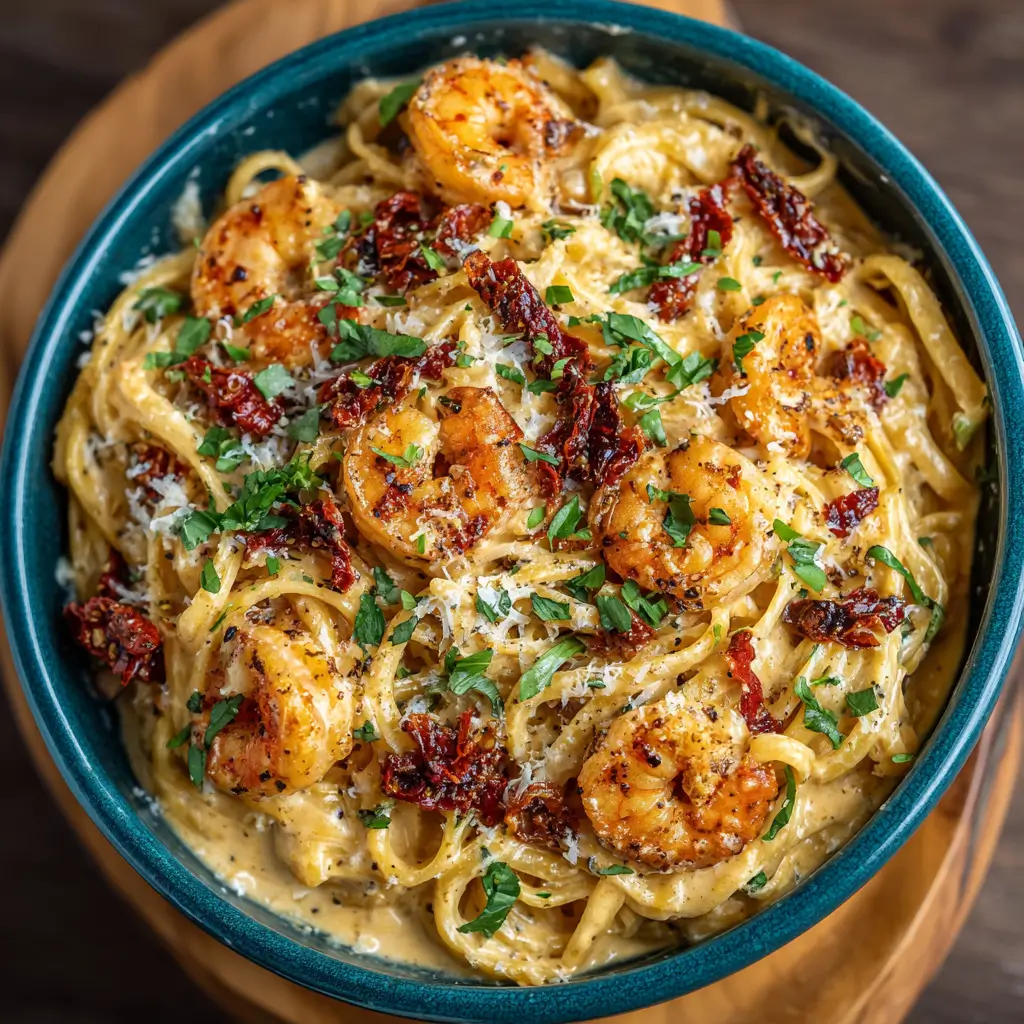
Creamy Sun-Dried Tomato Shrimp Pasta: A Luxurious, Flavor-Packed Italian-Inspired Delight
The history of creamy sun-dried tomato shrimp pasta is a modern culinary tale that blends Mediterranean tradition with contemporary American-Italian fusion cuisine. While classic Italian pastas have been enjoyed for centuries—dating back to the 13th century in regions like Sicily and Genoa—the specific combination of sun-dried tomatoes, succulent shrimp, and rich cream sauce emerged more recently, likely in the late 20th century. As global ingredients became more accessible and palates evolved toward bold, umami-rich flavors, chefs and home cooks began experimenting with preserved sun-dried tomatoes, which had long been used in Southern Italy for their intense sweetness and tang. When paired with fresh seafood like shrimp—an ingredient prominent in coastal Italian cooking—and enveloped in a luscious cream or Alfredo-style sauce, the result was a dish that balanced rustic charm with gourmet elegance. This recipe gained popularity in American bistros and food blogs during the 2000s, celebrated for its vibrant color, restaurant-quality taste, and relative ease of preparation. Today, it stands as a beloved weeknight favorite and dinner party staple, showcasing how traditional elements can be reimagined into something both comforting and sophisticated.
At the heart of creamy sun-dried tomato shrimp pasta lies a symphony of carefully chosen ingredients, each contributing depth, texture, and flavor. The star players include plump, juicy shrimp—preferably wild-caught and peeled with tails removed for easy eating. Their delicate sweetness contrasts beautifully with the robust, concentrated flavor of sun-dried tomatoes, which are typically packed in oil to preserve moisture and enhance richness. These tomatoes bring a tangy-sweet intensity that forms the backbone of the sauce. High-quality garlic adds aromatic pungency, while shallots or onions provide a subtle base note without overpowering the dish. Freshly grated Parmesan cheese melts into the sauce, adding saltiness and umami, while heavy cream or half-and-half delivers the velvety mouthfeel that defines the “creamy” aspect. A touch of lemon juice brightens the entire dish, cutting through the richness and elevating the other flavors. Optional additions like red pepper flakes introduce a gentle heat, and fresh herbs such as basil, parsley, or thyme lend a garden-fresh finish. The pasta component is equally vital—fettuccine, linguine, or penne work exceptionally well due to their ability to hold onto thick sauces. Whole wheat, gluten-free, or legume-based pastas can also be used for dietary adaptations without sacrificing too much texture. Every ingredient serves a purpose, creating a harmonious blend where no single element dominates, yet each contributes to an unforgettable dining experience.
Creating this delectable dish begins with gathering all your ingredients and preparing them ahead of time—a technique known as *mise en place*—to ensure a smooth and stress-free cooking process. Start by bringing a large pot of generously salted water to a boil. Add your choice of pasta—about 12 ounces (340g) for four servings—and cook according to package instructions until al dente. Reserve one cup of the starchy pasta water before draining; this liquid gold will help emulsify and thicken the sauce later. While the pasta cooks, pat the shrimp dry with paper towels and season lightly with salt, pepper, and optionally, a pinch of paprika or garlic powder for extra depth. Heat 1–2 tablespoons of olive oil in a large skillet over medium-high heat. Once shimmering, add the shrimp in a single layer and sear for about 1–2 minutes per side until they turn pink and opaque. Be careful not to overcook, as shrimp become rubbery when left too long on the heat. Remove the shrimp from the pan and set aside. In the same skillet, reduce the heat to medium and add a bit more olive oil if needed. Sauté finely chopped shallot or onion until translucent, about 3 minutes. Add minced garlic and cook for another 30 seconds until fragrant. Stir in approximately ½ cup (packed) of sliced or chopped oil-packed sun-dried tomatoes along with 1–2 tablespoons of their preserving oil for added richness. Cook for 2–3 minutes to deepen the flavors. Pour in ¾ to 1 cup of heavy cream (or a lighter alternative like half-and-half or coconut milk for dairy-free), stirring gently. Allow the mixture to simmer for 3–5 minutes until slightly reduced and beginning to thicken. Gradually whisk in ½ to ¾ cup of freshly grated Parmesan cheese, stirring continuously until melted and smooth. If the sauce feels too thick, loosen it with a splash of reserved pasta water. Return the cooked shrimp to the skillet, along with any accumulated juices, and stir to coat in the sauce. Let everything warm through for 1–2 minutes. Finally, drain the cooked pasta and add it directly to the skillet, tossing thoroughly to combine. Adjust seasoning with additional salt, black pepper, red pepper flakes, or a squeeze of fresh lemon juice to taste. Garnish with chopped fresh parsley or basil and serve immediately while hot and creamy.
To achieve restaurant-quality results every time, consider these expert tips. First, always use high-quality sun-dried tomatoes packed in oil rather than dry-packed ones—they offer superior flavor, tenderness, and integrate better into the sauce. Drain them slightly but reserve the oil; you’ll want to use a tablespoon of it in the sautéing stage for enhanced depth. Second, avoid overcrowding the pan when searing shrimp. Cooking them in batches ensures proper browning and prevents steaming, which leads to soggy texture. Third, never skip the step of reserving pasta water. Its starch content acts as a natural binder, helping the sauce cling to the noodles instead of pooling at the bottom of the plate. Fourth, undercook the pasta by about one minute since it will continue to absorb sauce once combined in the skillet. Fifth, grate your own Parmesan cheese instead of using pre-shredded varieties, which often contain anti-caking agents that inhibit smooth melting. Sixth, balance the acidity of the sun-dried tomatoes with a small amount of lemon zest or juice—this brightens the dish and prevents it from tasting flat. Seventh, keep the heat moderate when combining the cream and cheese to prevent curdling; low and slow wins the race here. Lastly, taste as you go! Adjust seasoning incrementally throughout the cooking process to build layers of flavor. With attention to detail and patience, even novice cooks can master this elegant dish.
This versatile recipe lends itself beautifully to numerous variations and customizations depending on dietary needs, flavor preferences, or what’s available in your pantry. For a vegetarian version, simply omit the shrimp and add protein-rich alternatives like chickpeas, white beans, or marinated tofu. You could also boost the vegetable content by incorporating sautéed spinach, roasted bell peppers, artichoke hearts, or asparagus. To make it dairy-free, substitute the heavy cream with full-fat coconut milk and use nutritional yeast or a plant-based Parmesan alternative in place of real cheese. For a lighter twist, swap out some or all of the cream with evaporated milk, Greek yogurt, or cashew cream for a healthier yet still creamy texture. If you prefer a thicker, clingier sauce, blend part of the sun-dried tomato mixture with a bit of cream before adding it to the pan. For a heartier meal, toss in cooked chicken, scallops, or even crispy pancetta. Spice lovers can increase the red pepper flakes or add a dash of cayenne or smoked paprika for warmth. Herb variations are endless—try tarragon for a slightly anise-like note, dill for freshness, or oregano for earthiness. Gluten-free eaters can easily use rice-based or chickpea pasta without compromising flavor. Want a baked version? Transfer the finished dish to an oven-safe casserole, top with mozzarella and breadcrumbs, and broil for 3–5 minutes until golden and bubbly. Whether served over zucchini noodles for a keto-friendly option or layered into a creamy pasta bake, this dish adapts gracefully to almost any lifestyle or occasion.
From a nutritional standpoint, creamy sun-dried tomato shrimp pasta offers a balanced profile with several health benefits when prepared mindfully. Shrimp is an excellent source of lean protein, providing around 20 grams per 3-ounce serving, while being low in calories and saturated fat. It’s also rich in essential nutrients like selenium, iodine, omega-3 fatty acids, and vitamin B12, supporting thyroid function, brain health, and metabolism. Sun-dried tomatoes are loaded with antioxidants, particularly lycopene—a compound linked to reduced risk of certain cancers and heart disease—as well as vitamin C, iron, and fiber. However, because they’re often packed in oil and may contain added salt, portion control is wise, especially for those monitoring sodium intake. The cream and cheese contribute calcium and energy but also increase the calorie and fat content, so moderation is key. Using lower-fat dairy options or plant-based substitutes can reduce saturated fat while maintaining creaminess. Whole grain or legume-based pastas elevate the fiber and protein content, promoting satiety and digestive health. Adding leafy greens like baby spinach not only boosts vitamins A, K, and folate but also increases volume without significantly raising calories. Despite its indulgent reputation, this dish can fit into a balanced diet when enjoyed in appropriate portions—typically 1 to 1.5 cups per serving—and paired with a side salad or steamed vegetables. As with any creamy pasta, mindful preparation transforms it from a guilty pleasure into a nutrient-dense, satisfying meal.
Ingredients:
• 12 oz (340g) fettuccine, linguine, or penne pasta
• 1 lb (450g) large shrimp, peeled and deveined
• ½ cup oil-packed sun-dried tomatoes, sliced or chopped
• 2 tbsp olive oil (plus 1 tbsp of sun-dried tomato oil)
• 1 small shallot or ½ medium onion, finely diced
• 3 cloves garlic, minced
• ¾ cup heavy cream (or half-and-half, coconut milk)
• ½ cup freshly grated Parmesan cheese (plus extra for serving)
• ¼ tsp red pepper flakes (optional)
• Salt and freshly ground black pepper, to taste
• 1 tbsp fresh lemon juice (plus zest for garnish)
• ¼ cup fresh parsley or basil, chopped
• Reserved pasta water, as needed
Directions:
1. Bring a large pot of salted water to a boil. Cook pasta according to package directions until al dente. Reserve 1 cup of pasta water, then drain and set aside.
2. Pat shrimp dry and season lightly with salt and pepper. Heat 2 tbsp olive oil in a large skillet over medium-high heat. Add shrimp in a single layer and cook 1–2 minutes per side until pink and opaque. Remove and set aside.
3. In the same skillet, add remaining olive oil and sun-dried tomato oil. Sauté shallot until soft, about 3 minutes. Add garlic and cook 30 seconds until fragrant.
4. Stir in sun-dried tomatoes and cook 2–3 minutes. Pour in heavy cream and bring to a gentle simmer. Cook 3–5 minutes to reduce slightly.
5. Reduce heat to low. Gradually whisk in Parmesan cheese until smooth and creamy. If needed, thin with reserved pasta water.
6. Return shrimp to the skillet. Stir in lemon juice, red pepper flakes, salt, and pepper. Warm through for 1–2 minutes.
7. Add cooked pasta and toss to coat evenly. Add more pasta water if necessary to reach desired consistency.
8. Garnish with fresh herbs, lemon zest, and extra Parmesan. Serve immediately.
Frequently Asked Questions (FAQ):
Can I use frozen shrimp? Yes, just thaw them completely in cold water and pat dry before cooking to ensure proper searing.
How do I store leftovers? Keep in an airtight container in the refrigerator for up to 3 days. Reheat gently on the stove with a splash of milk or water to revive creaminess.
Can I make this ahead of time? It’s best served fresh, but you can prep ingredients in advance. Cook the pasta and make the sauce separately, then combine just before serving.
Is this dish spicy? Not inherently—it depends on whether you add red pepper flakes. Omit them for a mild version suitable for kids.
What pasta works best? Long ribbons like fettuccine or linguine hold sauce well, but short shapes like penne or rigatoni also work great, especially with chunkier sauces.
Can I freeze creamy sun-dried tomato shrimp pasta? Not recommended, as dairy-based sauces tend to separate upon freezing and reheating.
Are sun-dried tomatoes healthy? Yes, they’re rich in antioxidants and nutrients, though higher in sodium and fat due to oil packing—rinsing briefly can help reduce excess oil.
Summary:
Indulge in a rich, flavorful bowl of creamy sun-dried tomato shrimp pasta—a perfect harmony of tender shrimp, tangy tomatoes, and velvety sauce over perfectly cooked noodles. Easy enough for weeknights, elegant enough for guests, this dish brings gourmet comfort straight to your table.