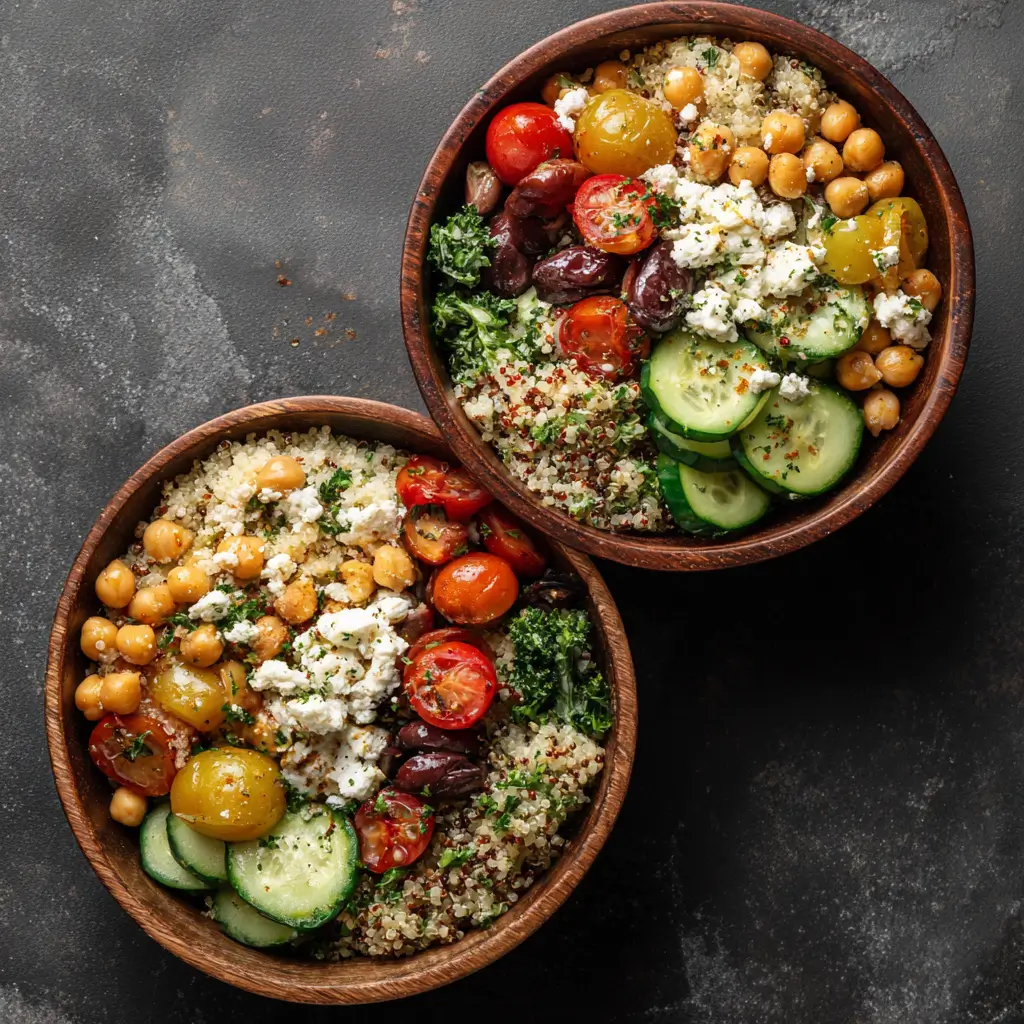
Mediterranean Chickpea Quinoa Bowls
The Mediterranean Chickpea Quinoa Bowl is more than just a meal—it’s a celebration of vibrant flavors, wholesome ingredients, and the timeless culinary traditions of the Mediterranean region. Packed with plant-based protein, fiber-rich grains, and fresh vegetables, this bowl is both nourishing and deeply satisfying. Whether you’re following a vegan or vegetarian lifestyle, looking to incorporate more nutrient-dense meals into your diet, or simply craving something light yet filling, this dish delivers on every level. With its colorful presentation and bold taste profile, it’s no wonder that Mediterranean-inspired grain bowls have surged in popularity across health-conscious kitchens worldwide.
The History
The roots of the Mediterranean Chickpea Quinoa Bowl stretch back through centuries of regional cooking across countries bordering the Mediterranean Sea—Greece, Turkey, Lebanon, Italy, and Spain, among others. While quinoa itself originates from the Andes in South America and wasn’t traditionally part of Mediterranean cuisine, its recent global rise has led to creative fusions that blend ancient grains with classic Mediterranean flavors. The use of chickpeas, however, dates back thousands of years in the Eastern Mediterranean and Middle East, where they are staples in dishes like hummus, falafel, and stews. Olive oil, olives, tomatoes, cucumbers, and herbs like oregano and parsley have long defined the heart of Mediterranean cooking—a style recognized for its emphasis on fresh produce, legumes, whole grains, and healthy fats. This bowl embodies that philosophy by combining modern superfoods with time-honored ingredients, creating a contemporary dish grounded in tradition.
Ingredients Breakdown
Every component of the Mediterranean Chickpea Quinoa Bowl plays a vital role in delivering flavor, texture, and nutrition:
- Quinoa: A complete protein containing all nine essential amino acids, quinoa serves as the hearty base of the bowl. It’s gluten-free, high in fiber, and absorbs seasonings beautifully.
- Chickpeas: Also known as garbanzo beans, these legumes provide plant-based protein, complex carbohydrates, and dietary fiber. They add a creamy yet slightly nutty texture when roasted or used straight from the can.
- Cucumber: Adds crisp freshness and hydration. English cucumbers are preferred for their thin skin and fewer seeds.
- Cherry Tomatoes: Bursting with sweetness and acidity, they contribute color and juiciness to balance the earthy elements.
- Red Onion: Offers a sharp, tangy bite that mellows when marinated or used raw in moderation.
- Kalamata Olives: Rich, briny, and packed with heart-healthy monounsaturated fats, these olives bring an authentic Mediterranean flair.
- Feta Cheese (optional): Adds creaminess and a salty tang. For a vegan version, omit or substitute with dairy-free feta.
- Fresh Herbs (parsley, mint, or dill): Elevate the aroma and freshness of the dish, enhancing the overall complexity.
- Lemon Juice: Brightens the entire bowl with citrus zest and helps preserve the vibrancy of the vegetables.
- Extra Virgin Olive Oil: A cornerstone of Mediterranean diets, it adds richness and carries flavors throughout the dish.
- Garlic & Spices (cumin, paprika, salt, pepper): Infuse depth and warmth, especially when used in the chickpea seasoning or dressing.
Step-by-Step Recipe
- Cook the Quinoa: Rinse 1 cup of quinoa under cold water to remove saponins (which can cause bitterness). In a saucepan, combine quinoa with 2 cups of water or vegetable broth. Bring to a boil, reduce heat to low, cover, and simmer for 15 minutes or until liquid is absorbed and quinoa is fluffy. Remove from heat, let sit covered for 5 minutes, then fluff with a fork. Allow it to cool slightly before assembling.
- Prepare the Chickpeas: Drain and rinse 1 can (15 oz) of chickpeas. Pat them dry with a clean towel. Toss with 1 tbsp olive oil, ½ tsp ground cumin, ¼ tsp smoked paprika, ½ tsp garlic powder, salt, and black pepper. Spread on a baking sheet and roast at 400°F (200°C) for 25–30 minutes, shaking halfway through, until golden and slightly crispy. Alternatively, use them unroasted for a softer texture.
- Chop the Vegetables: Dice 1 medium cucumber, halve 1 cup cherry tomatoes, thinly slice ¼ red onion, and pit and chop ¼ cup Kalamata olives. Place in separate bowls or mix together gently.
- Make the Dressing: In a small jar, whisk together 3 tbsp extra virgin olive oil, 2 tbsp freshly squeezed lemon juice, 1 minced garlic clove, ½ tsp Dijon mustard (optional), ½ tsp dried oregano, salt, and pepper. Shake well until emulsified.
- Chop Fresh Herbs: Finely chop ¼ cup fresh parsley and optionally add 1–2 tbsp fresh mint or dill for added brightness.
- Assemble the Bowls: Divide cooked quinoa among four bowls. Top evenly with roasted chickpeas, chopped vegetables, olives, and crumbled feta (if using). Drizzle generously with dressing and sprinkle with fresh herbs.
- Serve: Enjoy immediately at room temperature or chilled. These bowls also hold up well when refrigerated for meal prep.
Tips
- Rinse Quinoa Thoroughly: Skipping this step may result in a bitter aftertaste due to natural saponin coating.
- Roast Chickpeas for Crunch: Roasting not only enhances flavor but adds a delightful crunch that contrasts beautifully with soft quinoa and juicy veggies.
- Brighten with Lemon: Always add lemon juice just before serving to preserve its zesty punch.
- Use High-Quality Olive Oil: Since olive oil features prominently, opt for cold-pressed, extra virgin varieties for best flavor and health benefits.
- Prep Ahead: Cook quinoa, roast chickpeas, chop veggies, and make dressing up to 3 days in advance. Store separately in airtight containers and assemble when ready to eat.
- Season Each Component: Lightly season quinoa, chickpeas, and veggies individually so every layer contributes to the overall taste.
- Let Quinoa Cool: Warm quinoa can wilt fresh ingredients like herbs and greens if added too soon.
Variations and Customizations
This versatile bowl welcomes endless adaptations based on dietary needs, seasonal availability, or personal preference:
- Grain Swap: Replace quinoa with farro, bulgur wheat, brown rice, or couscous for a different texture and flavor profile.
- Add Greens: Layer baby spinach, arugula, or kale at the bottom of the bowl for an extra boost of vitamins and minerals.
- Protein Boost: Include grilled chicken, shrimp, salmon, or hard-boiled eggs for non-vegetarian versions. For additional plant protein, add lentils, tofu, or tempeh.
- Dairy-Free/Vegan Option: Skip feta or use a plant-based alternative made from almonds, coconut, or soy.
- Add Sweetness: Incorporate diced mango, pomegranate seeds, or dried cranberries for a sweet contrast to savory components.
- More Veggies: Add bell peppers, roasted zucchini, artichoke hearts, or shredded carrots for increased variety and crunch.
- Spice It Up: Add a pinch of red pepper flakes, harissa paste, or sliced jalapeños for heat lovers.
- Herb Variations: Try cilantro instead of parsley, or basil for a more aromatic lift.
- Avocado Addition: Sliced avocado adds creaminess and healthy fats—perfect for making the bowl more satiating.
- Grain-Free Version: Use cauliflower rice or massaged kale as a base for lower-carb options.
Health Considerations and Nutritional Value
The Mediterranean Chickpea Quinoa Bowl aligns closely with the principles of the renowned Mediterranean Diet—one of the most studied and celebrated eating patterns for promoting longevity, heart health, and overall wellness. Here’s why this bowl is a nutritional powerhouse:
- Heart-Healthy Fats: Extra virgin olive oil and olives provide monounsaturated fats, which support cardiovascular health by reducing bad cholesterol (LDL) levels.
- High Fiber Content: Both quinoa and chickpeas are rich in soluble and insoluble fiber, aiding digestion, stabilizing blood sugar, and promoting satiety.
- Plant-Based Protein: With about 8–10 grams of protein per serving (depending on additions), this bowl supports muscle repair and energy production without relying on animal products.
- Low Glycemic Index: The combination of complex carbs, fiber, and healthy fats results in slow glucose release, helping prevent insulin spikes—ideal for diabetics or those managing weight.
- Antioxidant-Rich: Tomatoes contain lycopene, cucumbers offer flavonoids, and herbs like parsley are loaded with vitamin C and chlorophyll—all contributing to reduced oxidative stress.
- Gluten-Free (when using certified quinoa): Naturally free from gluten, making it suitable for individuals with celiac disease or gluten sensitivity.
- Rich in Micronutrients: Quinoa provides magnesium, iron, and B-vitamins; chickpeas offer folate and zinc; leafy greens contribute calcium and vitamin K.
- Anti-Inflammatory Properties: Ingredients like olive oil, garlic, lemon, and herbs contain compounds shown to reduce inflammation linked to chronic diseases.
Nutritional Estimate (per serving, without optional add-ons):
Calories: ~380 | Protein: 12g | Carbohydrates: 45g | Fiber: 10g | Fat: 17g (mostly unsaturated) | Sugar: 6g | Sodium: 400mg (varies with added salt and feta)
Ingredients
- 1 cup uncooked quinoa (or 3 cups cooked)
- 2 cups water or vegetable broth
- 1 (15 oz) can chickpeas, drained and rinsed
- 1 tbsp extra virgin olive oil (for roasting)
- ½ tsp ground cumin
- ¼ tsp smoked paprika
- ½ tsp garlic powder
- Salt and black pepper to taste
- 1 medium cucumber, diced
- 1 cup cherry tomatoes, halved
- ¼ red onion, thinly sliced
- ¼ cup Kalamata olives, pitted and chopped
- ¼ cup fresh parsley, chopped (plus extra for garnish)
- 2 tbsp fresh mint or dill (optional)
- ½ cup crumbled feta cheese (optional, or substitute with vegan feta)
- 3 tbsp extra virgin olive oil (for dressing)
- 2 tbsp fresh lemon juice
- 1 clove garlic, minced
- ½ tsp Dijon mustard (optional)
- ½ tsp dried oregano
- Salt and pepper to taste
Directions
- Preheat oven to 400°F (200°C).
- Rinse quinoa thoroughly under cold water. In a medium saucepan, combine quinoa and water (or broth). Bring to a boil, reduce heat, cover, and simmer for 15 minutes. Remove from heat, let stand 5 minutes, then fluff with a fork and set aside to cool.
- On a baking sheet, toss chickpeas with 1 tbsp olive oil, cumin, paprika, garlic powder, salt, and pepper. Spread into a single layer and roast for 25–30 minutes, stirring once, until golden and slightly crisp. Let cool.
- While quinoa and chickpeas cook, prepare vegetables: dice cucumber, halve tomatoes, slice red onion, chop olives, and mince herbs.
- In a small bowl or jar, whisk together 3 tbsp olive oil, lemon juice, minced garlic, Dijon mustard (if using), oregano, salt, and pepper. Set dressing aside.
- To assemble each bowl: divide quinoa among four serving bowls. Top with roasted chickpeas, cucumber, tomatoes, red onion, olives, feta (if using), and fresh herbs.
- Drizzle each bowl with dressing just before serving. Toss lightly if desired, or leave layered for visual appeal.
- Serve immediately, or chill for a refreshing cold salad option. Great for meal prep—store components separately and combine within 3–4 days.
FAQ
Can I make this ahead of time?
Yes! This bowl is ideal for meal prep. Cook quinoa and roast chickpeas up to 4 days in advance. Chop vegetables and store them separately. Make the dressing and keep it refrigerated. Assemble bowls the day you plan to eat them for optimal freshness.
Is this recipe gluten-free?
Yes, provided you use certified gluten-free quinoa and ensure all other ingredients (especially spice blends) are labeled gluten-free to avoid cross-contamination.
How do I store leftovers?
Store assembled bowls in airtight containers in the refrigerator for up to 3 days. If possible, keep dressing separate until ready to serve to prevent sogginess.
Can I freeze this dish?
Freezing is not recommended, as the texture of vegetables and herbs will degrade upon thawing. However, plain cooked quinoa and roasted chickpeas can be frozen separately for later use.
What can I use instead of feta?
Try goat cheese for a tangier twist, ricotta salata for a firmer texture, or vegan feta made from tofu, almonds, or coconuts for dairy-free options.
Are canned chickpeas okay to use?
Absolutely. Just be sure to drain and rinse them well to reduce sodium content and improve digestibility.
Can I skip roasting the chickpeas?
Yes. You can use them straight from the can for a softer texture, though roasting adds significant flavor and crunch.
Is this bowl kid-friendly?
Many children enjoy the colorful components and mild flavors. You can adjust spices, omit onions, or serve ingredients deconstructed for picky eaters.
Summary
Nutrient-packed and bursting with Mediterranean flavors, this Chickpea Quinoa Bowl combines protein-rich legumes, whole grains, and fresh vegetables into a wholesome, satisfying meal. Perfect for lunch, dinner, or meal prep, it’s a delicious way to embrace plant-forward eating with every bite.