Moroccan Chicken Tagine with Apricots: A Fragrant Journey Through Flavor and Tradition
The History of Moroccan Chicken Tagine with Apricots
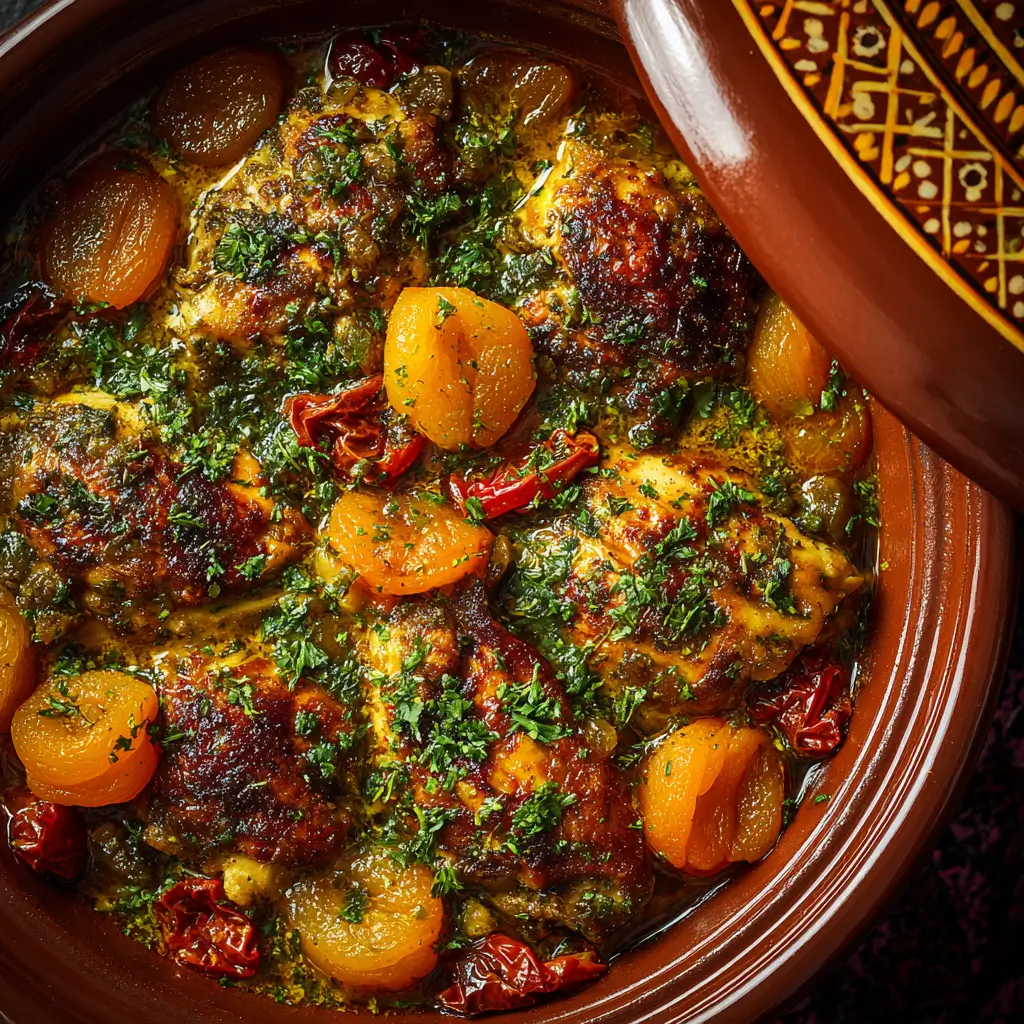
The Moroccan Chicken Tagine with Apricots is a culinary masterpiece that embodies the rich, layered flavors and cultural fusion inherent in North African cuisine. Originating from Morocco—a country located at the crossroads of Africa, the Middle East, and Europe—this dish reflects centuries of gastronomic evolution shaped by Berber, Arab, Andalusian, and Mediterranean influences. The word “tagine” refers not only to the dish itself but also to the distinctive conical clay pot in which it is traditionally cooked. This slow-cooking vessel allows steam to circulate and condense, returning moisture to the ingredients and intensifying the depth of flavor without drying out the meat.
Historically, tagines were prepared over open fires or charcoal braziers in Moroccan homes, often as communal meals shared among family and guests. The use of dried fruits such as apricots, prunes, and raisins dates back to ancient trade routes that connected Morocco with the Middle East and Asia. These sweet elements were combined with savory meats and aromatic spices to create a harmonious balance—a hallmark of Maghrebi cooking. Apricots, in particular, were prized for their natural sweetness and ability to complement spiced poultry dishes. Over time, this recipe has become one of the most beloved and internationally recognized Moroccan dishes, symbolizing both hospitality and culinary sophistication.
Today, Chicken Tagine with Apricots is celebrated not only across Morocco but throughout the world, appearing on menus in fine dining restaurants and home kitchens alike. It remains a centerpiece during festive occasions such as weddings, religious holidays like Eid al-Fitr, and family gatherings where food plays a central role in connection and celebration. Its enduring popularity lies in its comforting warmth, exotic aroma, and the way it brings together contrasting tastes—sweet, savory, spicy, and tangy—into a single, soul-satisfying experience.
Ingredients Breakdown: What Makes This Dish So Special?
The magic of Moroccan Chicken Tagine with Apricots lies in its carefully balanced blend of fresh ingredients, aromatic spices, and natural sweetness. Each component contributes to the overall complexity and depth of flavor that defines authentic Moroccan cuisine. Below is a detailed breakdown of every ingredient and its role in the dish:
- Chicken (bone-in, skin-on thighs and drumsticks): These cuts are preferred for their rich flavor and ability to remain tender during long, slow cooking. The bones add body to the sauce, while the skin renders fat that enhances richness.
- Onions (yellow or white): Sliced thinly and caramelized slowly, onions form the foundational base of the tagine, adding sweetness and texture to the stew.
- Garlic (freshly minced): Provides a pungent, earthy note that deepens the savory profile of the dish.
- Fresh ginger (grated): Adds warmth and a subtle zing, essential for balancing the sweetness of the apricots.
- Saffron threads (soaked in warm water): One of the most expensive spices in the world, saffron imparts a golden hue and a delicate floral aroma that elevates the entire dish.
- Ground cumin: Offers an earthy, nutty flavor that anchors the spice blend and complements the chicken beautifully.
- Ground coriander: Brings citrusy, slightly sweet notes that enhance other spices without overpowering them.
- Paprika (sweet or smoked): Adds color and mild heat; smoked paprika can introduce a deeper, more complex smokiness.
- Ground cinnamon: A key player in Moroccan spice blends, cinnamon lends warmth and pairs perfectly with dried fruit.
- Ground turmeric: Contributes both vibrant yellow color and anti-inflammatory properties, along with a gentle bitterness that rounds out the flavor.
- Cayenne pepper (optional): Used sparingly to provide a subtle kick for those who enjoy a bit of heat.
- Dried apricots (unsulfured if possible): The star of the show—these offer concentrated sweetness and chewy texture, absorbing the spiced broth and releasing fruity notes.
- Green olives (such as Picholine or Cerignola): Salty, briny olives cut through the sweetness and add a savory counterpoint that balances the dish.
- Chicken stock or broth: Forms the liquid base of the tagine, ensuring the meat stays moist and infusing the sauce with savory depth.
- Lemon juice (freshly squeezed): Brightens the dish at the end, lifting all the flavors and preventing it from becoming too heavy.
- Honey (preferably orange blossom or wildflower): Enhances the natural sweetness of the apricots and helps glaze the chicken during cooking.
- Fresh cilantro and parsley (chopped): Used both during cooking and as a garnish, these herbs bring freshness and brightness to contrast the rich, spiced sauce.
- Olive oil: Used for browning the chicken and sautéing aromatics, providing a fruity, robust base layer of flavor.
- Almonds (toasted and slivered or whole): Often sprinkled on top before serving, they add crunch and nuttiness, enhancing both texture and taste.
This symphony of ingredients creates a multidimensional flavor profile—simultaneously sweet, savory, spicy, and tangy—that exemplifies the artistry of Moroccan cooking.
Step-by-Step Recipe: How to Make Authentic Moroccan Chicken Tagine with Apricots
Creating a traditional Moroccan Chicken Tagine with Apricots may seem elaborate, but the process is deeply rewarding and surprisingly approachable. Follow this step-by-step guide to achieve restaurant-quality results in your own kitchen—even without a traditional tagine pot!
- Prepare the Ingredients: Begin by patting the chicken pieces dry with paper towels—this ensures proper browning. Slice the onions thinly, mince the garlic, grate the ginger, and chop the fresh herbs. Soak the saffron threads in 2 tablespoons of warm water to release their color and aroma. Cut the dried apricots in half if large.
- Brown the Chicken: Heat 3 tablespoons of olive oil in a heavy-bottomed Dutch oven or tagine pot over medium-high heat. Season the chicken generously with salt and pepper. Working in batches to avoid overcrowding, place the chicken skin-side down and sear until golden brown, about 5–6 minutes per side. Remove and set aside on a plate.
- Sauté the Aromatics: In the same pot, reduce the heat to medium and add the sliced onions. Cook slowly, stirring occasionally, until they begin to soften and turn translucent (about 8–10 minutes). Add the minced garlic and grated ginger, stirring constantly for 1 minute until fragrant.
- Bloom the Spices: Stir in 1 teaspoon ground cumin, 1 teaspoon ground coriander, 1/2 teaspoon paprika, 1/2 teaspoon ground cinnamon, 1/4 teaspoon ground turmeric, and a pinch of cayenne (if using). Cook for 30 seconds to toast the spices, releasing their essential oils and deepening their flavor.
- Build the Base: Return the browned chicken to the pot, arranging it skin-side up. Pour in 1 cup of chicken stock, followed by the soaked saffron with its liquid. Add 2 tablespoons of honey and the juice of half a lemon. Stir gently to combine.
- Add Dried Fruit and Simmer: Scatter the halved apricots evenly around the chicken. Tuck in a few sprigs of fresh cilantro and parsley. Bring the mixture to a gentle simmer, then cover the pot with a tight-fitting lid.
- Slow Cook to Perfection: Reduce the heat to low and let the tagine cook slowly for 45 minutes. After 30 minutes, check occasionally to ensure the liquid isn’t evaporating too quickly; add a splash more broth if needed.
- Incorporate Olives: At the 45-minute mark, stir in 1/2 cup of pitted green olives. Continue cooking uncovered for another 10–15 minutes to allow the sauce to thicken slightly and the flavors to meld.
- Finish and Garnish: Taste and adjust seasoning with additional salt, pepper, or a touch more lemon juice for brightness. Discard herb sprigs. Transfer to a serving platter and sprinkle with toasted slivered almonds and freshly chopped parsley and cilantro.
- Serve Warm: Traditionally served with couscous, crusty bread, or flatbreads like khobz, this tagine is best enjoyed immediately while hot and aromatic.
Tips for Perfect Moroccan Chicken Tagine Every Time
- Use Bone-In, Skin-On Chicken: While boneless chicken breasts may cook faster, they lack the richness and moisture retention of dark meat. Thighs and drumsticks yield juicier, more flavorful results.
- Don’t Rush the Onion Base: Caramelizing the onions slowly builds a sweet, savory foundation. If time allows, cook them over low heat for 15–20 minutes until deeply golden.
- Toast Your Spices: Blooming spices in oil unlocks their full potential. Be careful not to burn them—30 seconds is enough.
- Substitute When Necessary: No tagine pot? No problem! A Dutch oven, heavy skillet with lid, or even a slow cooker works well. For a slow cooker version, brown the chicken first, then transfer everything and cook on low for 6–7 hours.
- Beware of Sulfured Apricots: Choose unsulfured dried apricots when possible—they are darker in color and have a more natural, less chemically taste.
- Balance Sweetness: If the dish becomes too sweet, balance it with extra lemon juice or a splash of vinegar. Conversely, if it’s too tart, add a drizzle of honey.
- Let It Rest: Allow the tagine to sit for 5–10 minutes after cooking. This helps the flavors settle and makes for easier serving.
- Garnish Generously: Fresh herbs and toasted nuts aren’t just decorative—they add crucial texture and freshness that elevate each bite.
- Make Ahead Friendly: This dish tastes even better the next day! Store in the refrigerator for up to 3 days or freeze for up to 3 months. Reheat gently on the stove with a splash of water or broth.
Variations and Customizations
One of the beauties of Moroccan Chicken Tagine is its adaptability. Depending on regional traditions, seasonal availability, or dietary preferences, countless variations exist. Here are some popular twists you can try:
- Prune Version (Tagine M’rouzia): Replace apricots with pitted prunes for a richer, deeper sweetness. Often made during Ramadan and Eid, this version sometimes includes a small amount of butter and raisins.
- Vegan Option: Substitute chicken with chickpeas, potatoes, carrots, and zucchini. Use vegetable broth and increase spices accordingly. Serve over quinoa or millet for a hearty plant-based meal.
- With Preserved Lemons: Add 1–2 tablespoons of finely diced preserved lemon peel for a bold, tangy punch that’s quintessentially Moroccan.
- Spicier Kick: Add a chopped fresh chili (like serrano or jalapeño) or a pinch of harissa paste for extra heat.
- Nut Variations: Swap almonds for pine nuts, walnuts, or pistachios for different textures and flavor profiles.
- Fruit Swaps: Try figs, dates, or raisins instead of apricots. Each brings its own character—dates add molasses-like sweetness, while figs lend an earthy depth.
- Seafood Tagine: Though less common, some coastal regions make seafood versions with fish, shrimp, tomatoes, and chermoula sauce. Not traditional with apricots, but worth exploring.
- Aromatic Herbs: Infuse the stew with fresh mint or tarragon for a unique herbal twist.
- Cooking Methods: Bake in the oven at 325°F (160°C) for 1.5 hours for even, gentle heat distribution. Or use an Instant Pot: Sear on Saute mode, then pressure cook for 15 minutes with quick release.
Health Considerations and Nutritional Value
Moroccan Chicken Tagine with Apricots is not only delicious but also nutritionally balanced when prepared mindfully. Here’s a breakdown of its health benefits and considerations:
Protein-Rich: Chicken provides high-quality protein essential for muscle repair, immune function, and satiety. Choosing skin-on pieces adds flavor but also increases saturated fat content—opt for skinless thighs or remove the skin before eating to reduce calories.
Complex Carbohydrates: When served with whole grain couscous or barley, the meal offers sustained energy and fiber. Pairing with vegetables like carrots or sweet potatoes boosts nutrient density.
Healthy Fats: Olive oil is rich in monounsaturated fats and antioxidants, supporting heart health. Almonds contribute vitamin E, magnesium, and healthy fats.
Dried Fruit Benefits: Apricots are high in beta-carotene (vitamin A), potassium, and fiber. However, they are naturally high in sugar, so portion control is advised, especially for diabetics. Unsweetened, unsulfured varieties are best.
Anti-Inflammatory Spices: Turmeric contains curcumin, a potent anti-inflammatory compound. Cinnamon helps regulate blood sugar, while ginger aids digestion and reduces nausea.
Low in Added Sugar: Unlike many stews, this dish relies on natural sweetness from fruit rather than refined sugars. Using raw honey in moderation supports local immunity and provides trace nutrients.
Sodium Watch: Green olives and store-bought broths can be high in sodium. To lower salt content, use low-sodium broth and rinse olives briefly under water before adding.
Portion Guidance: A typical serving (1/4 of the recipe with 3/4 cup couscous) contains approximately:
- Calories: 450–550
- Protein: 30–35g
- Fat: 20–25g (mostly healthy fats)
- Carbohydrates: 40–50g
- Fiber: 5–7g
- Sugars: 18–22g (primarily from fruit)
This dish aligns well with Mediterranean and flexitarian diets, promoting longevity, gut health, and metabolic balance.
Ingredients
- 6 pieces bone-in, skin-on chicken (thighs and/or drumsticks)
- 3 tablespoons olive oil
- 2 large yellow onions, thinly sliced
- 4 cloves garlic, minced
- 1 tablespoon fresh ginger, grated
- 1/4 teaspoon saffron threads, soaked in 2 tbsp warm water
- 1 tsp ground cumin
- 1 tsp ground coriander
- 1/2 tsp paprika (sweet or smoked)
- 1/2 tsp ground cinnamon
- 1/4 tsp ground turmeric
- Pinch of cayenne pepper (optional)
- 1 cup dried apricots, halved (unsulfured preferred)
- 1/2 cup pitted green olives
- 1 cup chicken stock (low-sodium recommended)
- 2 tbsp honey (preferably floral variety)
- Juice of 1/2 lemon (plus more to taste)
- 1/4 cup fresh cilantro, chopped (plus a few sprigs)
- 1/4 cup fresh parsley, chopped (plus a few sprigs)
- 1/4 cup slivered almonds, toasted
- Salt and freshly ground black pepper, to taste
Directions
- Pat chicken dry and season with salt and pepper. Heat olive oil in a large Dutch oven or tagine over medium-high heat. Brown chicken pieces skin-side down for 5–6 minutes per side until golden. Remove and set aside.
- Lower heat to medium. Add onions and cook for 8–10 minutes until softened and beginning to caramelize. Stir in garlic and ginger; cook 1 minute until fragrant.
- Add cumin, coriander, paprika, cinnamon, turmeric, and cayenne. Stir for 30 seconds to bloom spices.
- Return chicken to the pot. Pour in chicken stock, saffron with its liquid, honey, and lemon juice. Stir gently to combine.
- Add apricots, fresh herb sprigs, and distribute evenly around the chicken.
- Bring to a simmer, then cover and reduce heat to low. Cook for 45 minutes.
- Add green olives and continue cooking uncovered for 10–15 minutes to thicken sauce slightly.
- Taste and adjust seasoning with salt, pepper, or additional lemon juice.
- Discard herb sprigs. Transfer to a serving dish and garnish with toasted almonds, chopped cilantro, and parsley.
- Serve hot with couscous, rice, or crusty bread.
FAQ
- Can I make this tagine ahead of time?
- Yes! This dish actually improves in flavor after sitting overnight. Cool completely, refrigerate in an airtight container, and reheat gently on the stove with a splash of broth.
- What can I substitute for dried apricots?
- You can use prunes, dates, figs, or raisins. Each will alter the flavor slightly but still maintain the sweet-savory balance.
- Is a tagine pot necessary?
- No. A heavy-bottomed pot with a tight-fitting lid (like a Dutch oven) works perfectly. Just ensure slow, even cooking.
- Can I use chicken breast?
- You can, but breast meat dries out more easily. If using, reduce cooking time to 25–30 minutes and consider adding extra broth.
- Are green olives essential?
- They provide a salty contrast, but you can omit them or replace with Kalamata olives if preferred.
- How do I store leftovers?
- Cool completely and refrigerate for up to 3 days or freeze for up to 3 months. Thaw overnight and reheat gently.
- Can I make this gluten-free?
- Yes! Ensure your broth is certified gluten-free, and serve with quinoa or gluten-free couscous.
- Why is my sauce too sweet?
- Brighten it with more lemon juice or a splash of apple cider vinegar. Adding olives or capers can also help balance the sweetness.
Summary
Moroccan Chicken Tagine with Apricots is a timeless dish that marries tender chicken, fragrant spices, and sweet-tart apricots in a deeply aromatic stew that captures the soul of North African cuisine. Served with toasted almonds and fresh herbs, it’s a celebration of flavor, tradition, and the art of slow cooking.