Mediterranean Falafel Bowls: A Flavorful, Wholesome Plant-Based Delight
The Mediterranean diet is celebrated worldwide for its health benefits, vibrant flavors, and emphasis on whole, plant-based foods. Among the many treasures of this culinary tradition, falafel stands out as a beloved staple—a crispy-on-the-outside, tender-on-the-inside fritter made from ground legumes and aromatic herbs. When transformed into a nourishing bowl format, complete with fresh vegetables, grains, and creamy sauces, falafel becomes more than just a street food favorite—it’s a balanced, satisfying meal that captures the essence of Mediterranean cuisine. In this comprehensive guide, we dive deep into the history, ingredients, preparation techniques, and nutritional benefits of Mediterranean Falafel Bowls, providing everything you need to recreate this delicious dish at home.
The History of Falafel and Its Place in Mediterranean Cuisine
Falafel has a rich and somewhat debated history, tracing its origins back over a thousand years. While commonly associated with Middle Eastern countries like Lebanon, Israel, Egypt, and Palestine, its roots may lie even deeper in ancient Egyptian Coptic communities who used fava beans to create a similar fried ball. Over time, chickpeas became the primary ingredient in many regions, especially in Levantine countries, giving falafel its now-familiar golden-brown hue and nutty flavor.
As trade routes expanded and cultures intermingled across the Mediterranean basin, falafel traveled westward, becoming a popular street food from Morocco to Greece. It was embraced not only for its affordability and protein-rich composition but also for its adaptability. In modern times, falafel has become a symbol of plant-based eating, featured in vegetarian and vegan diets around the globe. The Mediterranean Falafel Bowl, a contemporary twist on this classic, reflects both tradition and innovation—honoring ancestral recipes while embracing today’s focus on wholesome, colorful, nutrient-dense meals served in a deconstructed format ideal for customization and freshness.
Ingredients Breakdown: What Makes a True Mediterranean Falafel Bowl?
A Mediterranean Falafel Bowl isn’t just about the falafel—it’s an ensemble of complementary components that come together to create harmony in flavor, texture, and nutrition. Each element plays a crucial role:
- Falafel: Made from soaked (not cooked) dried chickpeas, fresh parsley, cilantro, onions, garlic, and warm spices like cumin and coriander. Using dried chickpeas instead of canned ensures the right texture—firm enough to hold shape when fried or baked, yet fluffy inside.
- Base Grains: Typically includes whole grains such as brown rice, quinoa, farro, or freekeh. These provide sustained energy, fiber, and a neutral canvas for bold flavors.
- Fresh Vegetables: Chopped cucumbers, ripe tomatoes, red onions, Kalamata olives, pickled turnips, and shredded lettuce or baby spinach add crunch, juiciness, and essential vitamins.
- Tzatziki or Tahini Sauce: Creamy tzatziki (made with yogurt, cucumber, garlic, and dill) offers a cooling contrast, while tahini sauce (tahini, lemon juice, garlic, water) brings earthy richness. Both enhance moisture and depth.
- Hummus: Often layered at the bottom of the bowl, hummus adds creaminess and extra plant-based protein.
- Lemon Wedges: For a final squeeze of brightness that lifts all the flavors.
- Optional Add-ons: Feta cheese (or vegan feta), roasted red peppers, artichoke hearts, sun-dried tomatoes, or grilled halloumi for added complexity.
Every ingredient contributes to the overall balance—creamy, crunchy, tangy, savory, herbal—making each bite a celebration of Mediterranean terroir and culinary wisdom.
Step-by-Step Recipe: How to Make Authentic Mediterranean Falafel Bowls at Home
Ingredients
For the Falafel:
- 1 cup dried chickpeas (soaked overnight in water – do not cook)
- 1 small onion, roughly chopped
- 4 cloves garlic
- 1 cup fresh parsley, tightly packed
- 1 cup fresh cilantro, tightly packed
- 1 tsp ground cumin
- 1 tsp ground coriander
- 1/2 tsp cayenne pepper (optional)
- 1 tsp salt (or to taste)
- 1/2 tsp black pepper
- 1 tbsp chickpea flour or all-purpose flour (for binding)
- 1 tsp baking powder (helps fluffiness)
- Vegetable oil (for frying) or olive oil spray (for baking)
For the Bowls:
- 2 cups cooked quinoa or brown rice
- 1 cup hummus
- 1 large cucumber, diced
- 2 medium tomatoes, chopped
- 1/2 red onion, thinly sliced
- 1 cup Kalamata olives, halved
- 2 cups mixed greens (spinach, arugula, or romaine)
- 1/2 cup pickled red onions or turnips (optional)
- Crumbled feta cheese (optional, omit for vegan version)
- Lemon wedges, for serving
For the Tahini Sauce:
- 1/4 cup tahini (sesame paste)
- 2 tbsp fresh lemon juice
- 1 clove garlic, minced
- 2–4 tbsp water (to thin)
- Salt to taste
For the Tzatziki (alternative sauce):
- 1 cup plain Greek yogurt (use dairy-free yogurt for vegan option)
- 1/2 cucumber, grated and squeezed dry
- 1 clove garlic, minced
- 1 tbsp fresh dill, chopped
- 1 tbsp lemon juice
- Salt and pepper to taste
Directions
- Soak the Chickpeas: Place dried chickpeas in a large bowl and cover with cold water (at least 3 inches above). Soak for 18–24 hours. Do not use canned chickpeas, as they contain too much moisture and will result in mushy falafel.
- Prepare the Falafel Mixture: Drain and rinse the soaked chickpeas. In a food processor, combine chickpeas, onion, garlic, parsley, cilantro, cumin, coriander, cayenne, salt, and pepper. Pulse until the mixture resembles coarse sand—do not over-process into a paste.
- Rest and Thicken: Transfer the mixture to a bowl. Stir in chickpea flour and baking powder. Cover and refrigerate for at least 30 minutes (up to 1 hour) to help the mixture firm up.
- Shape the Falafel: Use a tablespoon or small ice cream scoop to portion the mixture. Roll into balls (about 1.5 inches in diameter) and flatten slightly into patties.
- Cook the Falafel:
- Frying Method: Heat 1/2 inch of vegetable oil in a skillet over medium heat (350°F). Fry falafel in batches for 3–4 minutes per side, until deeply golden and crisp. Drain on paper towels.
- Baking Method (Healthier Option): Preheat oven to 375°F (190°C). Place falafel on a parchment-lined baking sheet. Brush or spray lightly with olive oil. Bake for 25–30 minutes, flipping halfway, until golden and firm.
- Air Fryer Method: Spray falafel with oil and air fry at 370°F for 12–15 minutes, shaking halfway through.
- Make the Sauces: For tahini sauce, whisk tahini, lemon juice, garlic, and salt. Gradually add water until smooth and pourable. For tzatziki, mix all ingredients in a bowl and chill until serving.
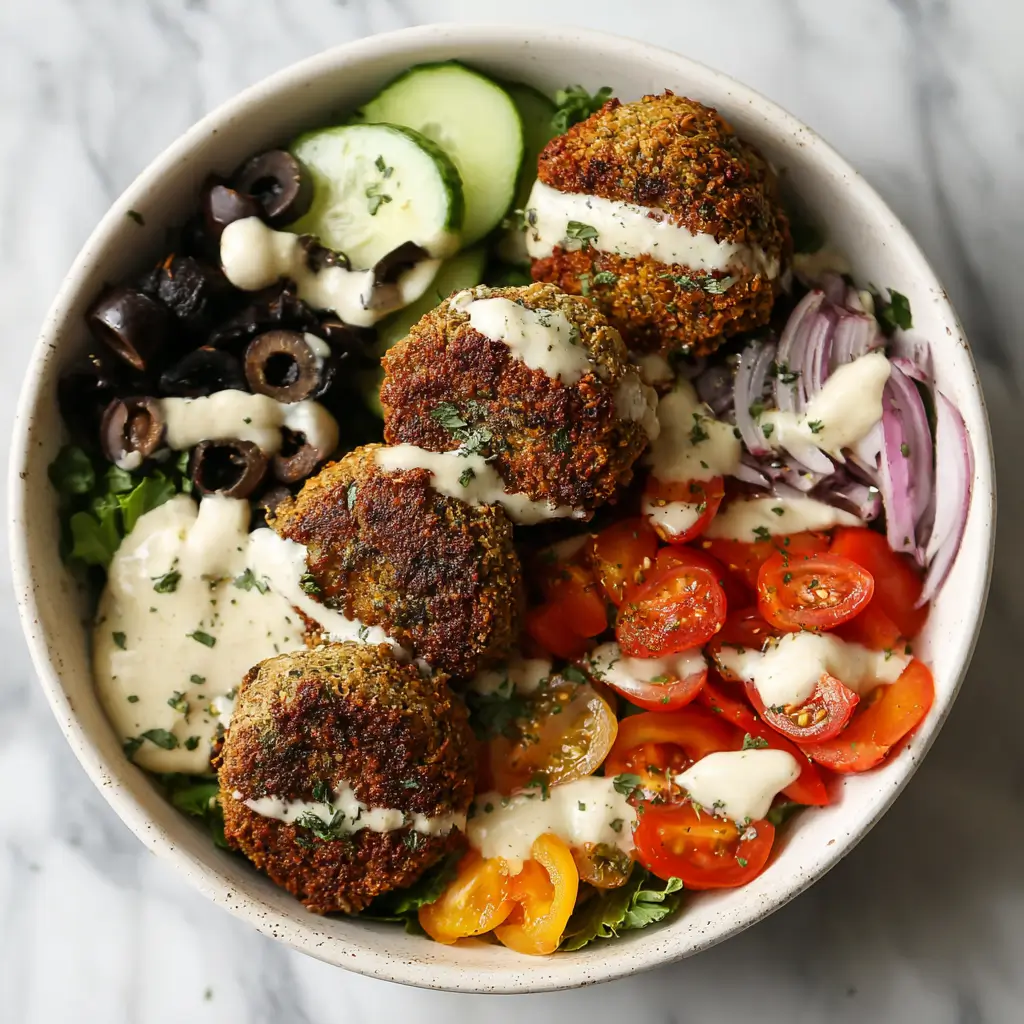
- Assemble the Bowls: Start with a base of quinoa or rice. Spread a spoonful of hummus. Arrange falafel, cucumbers, tomatoes, onions, olives, greens, and any additional toppings. Drizzle generously with tahini or tzatziki sauce. Finish with crumbled feta and a squeeze of lemon juice.
Expert Tips for Perfect Falafel Bowls Every Time
- Never Use Canned Chickpeas: This is the #1 mistake. Canned chickpeas are already cooked and contain excess moisture, leading to falling-apart falafel. Always start with raw, dried chickpeas that have been soaked.
- Chill the Mixture: Refrigerating the falafel mixture helps it bind better and makes shaping easier.
- Don’t Overprocess: Pulse the ingredients just until combined. A slightly coarse texture gives falafel its signature chew.
- Oil Temperature Matters: If frying, ensure the oil is hot enough (around 350°F). Too cool, and the falafel will absorb oil; too hot, and they’ll burn outside before cooking through.
- Double Batch and Freeze: Make extra falafel and freeze uncooked patties on a tray before transferring to a bag. Cook directly from frozen—add a few extra minutes.
- Balance Textures: Combine creamy (hummus, sauce), crunchy (cucumber, lettuce), and chewy (grains, falafel) elements for a satisfying mouthfeel.
- Prep Ahead: Cook grains, chop veggies, and make sauces up to 3 days in advance. Store separately and assemble bowls fresh.
Variations and Customizations: Make It Your Own
The beauty of the Mediterranean Falafel Bowl lies in its versatility. Here are creative ways to customize it based on dietary needs, preferences, or seasonal ingredients:
- Vegan Version: Skip feta or use a plant-based alternative. Ensure tzatziki is made with dairy-free yogurt.
- Gluten-Free: Use chickpea flour and confirm all other ingredients (like sauces) are certified gluten-free.
- Low-Carb/Keto: Replace grains with cauliflower rice or a bed of massaged kale. Increase healthy fats with avocado slices.
- Spice It Up: Add harissa paste to the falafel mix or drizzle spicy zhug (Yemeni hot sauce) over the bowl.
- Protein Boost: Top with grilled chicken, shrimp, or hard-boiled eggs for non-vegetarian versions.
- Seasonal Twists: In summer, add grilled zucchini or eggplant. In winter, include roasted sweet potatoes or beets.
- Grain Alternatives: Try bulgur wheat, couscous, or wild rice blends for different textures and flavors.
- Kid-Friendly: Serve falafel as sliders in pita, or deconstruct the bowl into a fun “build-your-own” dinner activity.
Health Considerations and Nutritional Value
Mediterranean Falafel Bowls are not only delicious but also remarkably nutritious, aligning closely with principles of heart-healthy, anti-inflammatory, and sustainable eating patterns.
Nutritional Highlights (per average bowl):
- Calories: ~600–750 kcal (varies by size and ingredients)
- Protein: 18–25g (from chickpeas, hummus, grains, and optional dairy)
- Fiber: 12–18g (supports digestion and satiety)
- Healthy Fats: Monounsaturated and polyunsaturated fats from olive oil, tahini, and olives promote heart health.
- Complex Carbohydrates: Whole grains and legumes provide steady energy without spiking blood sugar.
- Vitamins & Minerals: Rich in vitamin C (tomatoes, lemon), vitamin K (greens), iron (chickpeas), calcium (tahini, yogurt), and antioxidants from colorful vegetables.
Health Benefits:
- Promotes gut health due to high fiber and fermented elements (like yogurt in tzatziki).
- Supports cardiovascular wellness through olive oil, nuts/seeds, and legumes.
- May reduce inflammation thanks to herbs, garlic, and antioxidant-rich produce.
- Ideal for weight management—high volume, low energy density, and naturally filling.
Dietary Notes:
- Suitable for vegetarians and can be adapted for vegans, gluten-free, and dairy-free diets.
- Low in saturated fat and cholesterol-free (when prepared without animal products).
- Rich in plant-based protein, making it excellent for meatless Mondays or full-time plant-forward lifestyles.
Frequently Asked Questions (FAQ)
Q: Can I bake falafel instead of frying?
A: Absolutely! Baking is a healthier alternative that still yields crispy results. Just be sure to spray or brush with oil and flip halfway through for even browning.
Q: Why did my falafel fall apart during cooking?
A: Likely causes include using canned chickpeas, over-processing the mixture, skipping the chilling step, or insufficient binder (flour). Stick to dried, soaked chickpeas and follow the recipe steps precisely.
Q: How long do falafel bowls keep in the fridge?
A: Assembled bowls last 1–2 days, but ingredients are best stored separately. Cooked falafel keeps for 4 days; sauces for up to 1 week; grains for 5 days.
Q: Can I freeze falafel?
A: Yes! Freeze uncooked falafel balls or patties on a tray, then transfer to a freezer bag. Cook from frozen—no thawing needed.
Q: Is falafel gluten-free?
A: Traditionally yes—if made with chickpea flour and no cross-contamination. Always check labels if buying pre-made mixes.
Q: What can I use instead of tahini?
A: While tahini is traditional, you can substitute with almond butter or sunflower seed butter for a similar creamy texture, though the flavor will vary slightly.
Q: Are falafel bowls kid-friendly?
A: Definitely! Many children enjoy the handheld nature of falafel. Serve them as mini sliders, in wraps, or let kids build their own bowls with fun toppings.
Summary
Mediterranean Falafel Bowls are a vibrant fusion of tradition, flavor, and nutrition—packed with protein-rich falafel, whole grains, fresh vegetables, and luscious sauces. They offer a customizable, plant-powered meal that satisfies hunger, supports well-being, and celebrates the bounty of the Mediterranean table.