Introduction
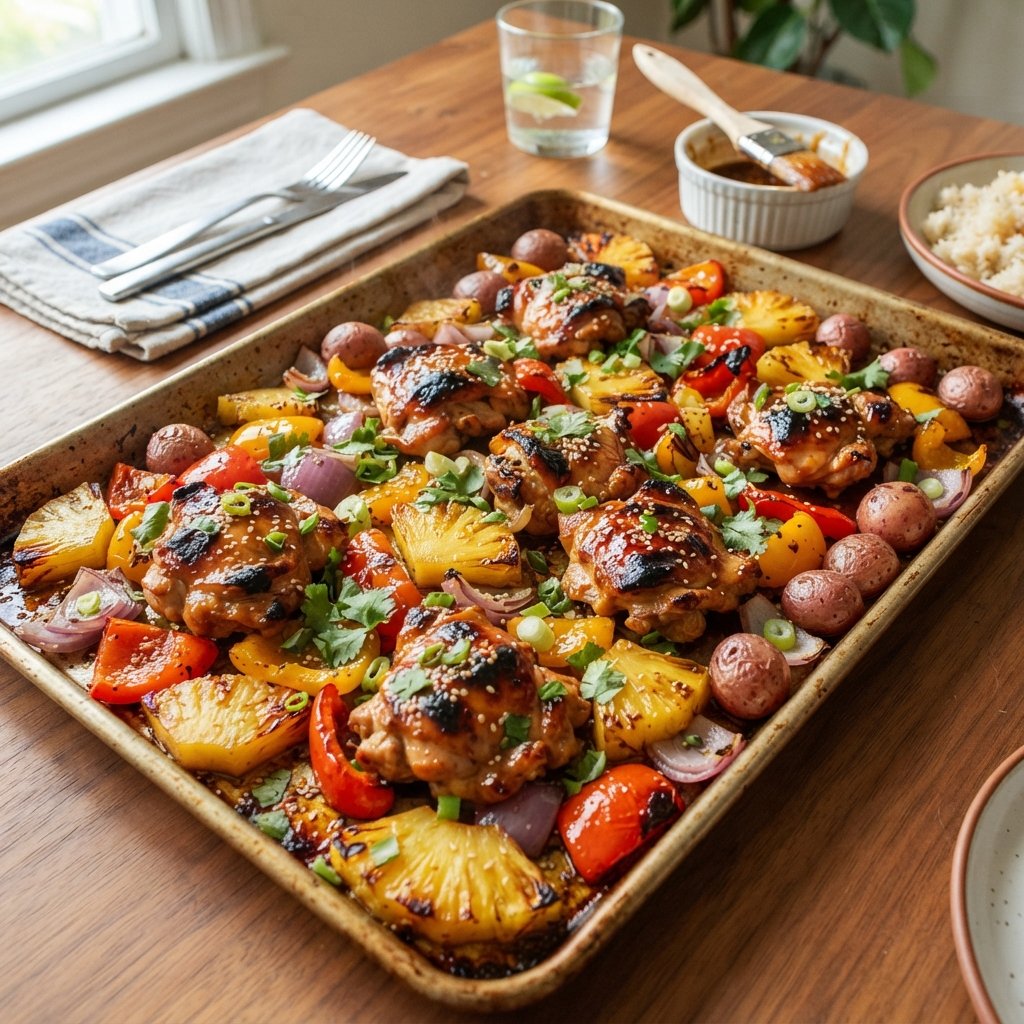
Welcome to the ultimate guide for creating the perfect Hawaiian Chicken Sheet Pan dinner. In today’s fast-paced world, finding a meal that balances convenience, flavor, and nutritional value can often feel like a daunting task. This Hawaiian Chicken Sheet Pan recipe emerges as a beacon of hope for busy home cooks, food enthusiasts, and health-conscious individuals alike. By combining the tropical sweetness of pineapple with savory glazed chicken and colorful vegetables, this dish offers a symphony of flavors that transports your taste buds to the islands without requiring you to leave your kitchen.
The beauty of a sheet pan dinner lies in its simplicity. Everything cooks on a single tray, minimizing cleanup time and maximizing oven efficiency. This method ensures that the chicken remains juicy while the vegetables roast to perfection, absorbing the delicious marinade that ties the entire dish together. Whether you are feeding a family of four, prepping meals for the week, or hosting a casual dinner party, this recipe is versatile enough to meet your needs. Throughout this comprehensive guide, we will explore every aspect of this dish, from its cultural origins to the scientific breakdown of its ingredients, ensuring you have all the knowledge necessary to master this meal.
The History
To truly appreciate Hawaiian Chicken, one must understand the culinary landscape from which it emerged. Interestingly, what we commonly refer to as “Hawaiian cuisine” in mainland America is often a fusion of influences rather than traditional native Hawaiian food. The incorporation of pineapple into savory dishes gained significant traction in the mid-20th century, largely driven by the marketing efforts of the Dole Food Company. James Dole, known as the Pineapple King, established massive pineapple plantations in Hawaii and sought ways to increase domestic consumption of the fruit beyond desserts and cocktails.
The concept of “Hawaiian Chicken” typically involves a sweet and savory sauce, often resembling teriyaki, which highlights the strong Asian influence on Hawaiian food culture. Immigrants from China, Japan, and the Philippines brought their cooking techniques and flavor profiles to the islands, which blended with local ingredients like pineapple and macadamia nuts. The sheet pan method itself is a modern adaptation. While roasting meats and vegetables together is an ancient cooking technique, the specific trend of “sheet pan dinners” surged in popularity during the 2010s as a response to the demand for quick, one-pan meals that reduce dishwashing time. This recipe represents a convergence of historical fusion cuisine and modern cooking convenience.
Ingredients Breakdown
Understanding the role of each component in this recipe is crucial for achieving the best possible results. Here is a detailed analysis of the key ingredients:
Chicken Thighs vs. Chicken Breasts
While both cuts work, boneless, skinless chicken thighs are generally preferred for sheet pan recipes. Thighs have a higher fat content than breasts, which helps them remain moist and tender during the high-heat roasting process. Chicken breasts can easily dry out if overcooked even by a few minutes. However, if you are prioritizing lean protein, breasts are a viable option provided you monitor the internal temperature closely.
Fresh vs. Canned Pineapple
Fresh pineapple offers a bright, acidic sweetness that cuts through the richness of the sauce. However, it contains bromelain, an enzyme that can break down proteins and potentially make the chicken mushy if marinated for too long. Canned pineapple is pasteurized, which deactivates the enzyme, making it safer for longer marination. Canned chunks also tend to hold their shape better under high heat. For this recipe, fresh is recommended for flavor, but add it halfway through cooking to prevent texture issues.
Bell Peppers and Onions
Red and green bell peppers provide a crunch and a vitamin C boost. They also add visual contrast to the dish. Onions, particularly red or yellow varieties, caramelize during roasting, adding a depth of sweetness that complements the pineapple. Cutting these vegetables into uniform sizes ensures they cook at the same rate as the chicken.
The Glaze Sauce
The soul of this dish is the sauce. Typically made from soy sauce, brown sugar, pineapple juice, and garlic, this mixture creates a sticky caramelization on the exterior of the chicken. Soy sauce provides umami and saltiness, brown sugar adds molasses notes and aids in browning, while garlic introduces aromatic complexity. Cornstarch is often used as a slurry to thicken the sauce so it clings to the ingredients rather than pooling at the bottom of the pan.
Step-by-Step Recipe
Follow this narrative walkthrough to understand the flow of cooking this meal. This section is designed to guide you through the process with context for each action.
Phase 1: Preparation and Marination
Begin by gathering all your ingredients. Mise en place is essential for sheet pan cooking because once the oven is on, things move quickly. Cut your chicken into bite-sized cubes, aiming for roughly 1.5 inches per piece. This size ensures they cook through without burning the exterior. Place the chicken in a large bowl. In a separate small bowl, whisk together your sauce ingredients. Pour half of the sauce over the chicken and reserve the other half for later. Allow the chicken to sit for at least 15 minutes, though 30 minutes is ideal for flavor penetration.
Phase 2: Vegetable Prep
While the chicken marinates, focus on your vegetables. Core and seed the bell peppers, slicing them into squares that match the size of the chicken pieces. Peel the onion and cut it into wedges or chunks. If you are using fresh pineapple, peel the skin carefully, remove the core, and slice into chunks. If using canned, drain the juice thoroughly to prevent the pan from becoming too watery. Uniformity is key here; if pieces are too small, they will burn; too large, and they will remain raw.
Phase 3: Pan Assembly
Preheat your oven to 400°F (200°C). Line a large rimmed baking sheet with aluminum foil or parchment paper. This step is non-negotiable for easy cleanup, as the sugar in the sauce can burn and stick fiercely to the pan. Arrange the chicken pieces on one side of the pan and the vegetables on the other. Do not overcrowd the pan. If the pieces are touching too much, they will steam instead of roast, resulting in a soggy texture. Use two pans if necessary.
Phase 4: The Roasting Process
Place the pan in the center rack of the oven. Roast for about 10 minutes. After 10 minutes, remove the pan carefully. This is the time to add the fresh pineapple if you are using it, as it cooks faster than the root vegetables and chicken. Brush the reserved sauce over the chicken and vegetables. This layering of sauce ensures a glossy finish and intense flavor. Return the pan to the oven for another 10 to 15 minutes.
Phase 5: Finishing Touches
The dish is ready when the chicken reaches an internal temperature of 165°F (74°C) and the vegetables are tender-crisp. If you desire a thicker glaze, you can transfer the pan juices to a small saucepan on the stove, mix with a little cornstarch slurry, and simmer until thick, then drizzle over the finished dish. Garnish with sliced green onions and sesame seeds for a professional touch before serving.
Tips
- Avoid Soggy Vegetables: Ensure your vegetables are completely dry before adding them to the pan. Excess moisture from washing can create steam.
- High Heat is Key: Roasting at 400°F or higher ensures caramelization. Lower temperatures will cook the chicken but won’t give you that desirable sticky glaze.
- Use Parchment Paper: Sugar burns easily. Parchment paper prevents the sauce from bonding to your metal pan, saving you from scrubbing later.
- Cut Uniformly: Consistency in cutting ensures even cooking. You don’t want burnt onions alongside raw chicken.
- Rest the Chicken: Let the chicken rest for 5 minutes after taking it out of the oven. This allows the juices to redistribute throughout the meat.
- Broil for Finish: If the chicken is cooked but not browned enough, turn on the broiler for the last 2 minutes, watching closely to prevent burning.
- Room Temperature Meat: Let the chicken sit out for 15 minutes before cooking. Cold chicken going into a hot oven can cook unevenly.
Variations and Customizations
This recipe is highly adaptable to suit various dietary needs and flavor preferences. Here are several ways to customize your Hawaiian Chicken Sheet Pan:
Spicy Hawaiian Chicken
For those who enjoy heat, add red pepper flakes, sriracha, or a diced jalapeño to the sauce mixture. The sweetness of the pineapple pairs exceptionally well with spicy elements, creating a sweet-heat profile popular in many Asian-fusion dishes.
Low-Carb or Keto Version
To reduce the carbohydrate count, substitute the brown sugar with a keto-friendly sweetener like erythritol or monk fruit. Replace the pineapple with lower-sugar fruits like strawberries or omit the fruit entirely and increase the portion of low-carb vegetables such as broccoli or zucchini. Use coconut aminos instead of soy sauce to reduce sodium and avoid soy.
Vegetarian Adaptation
Replace the chicken with extra-firm tofu or tempeh. Press the tofu thoroughly to remove excess water before marinating to ensure it absorbs the sauce. You can also add chickpeas for added protein and texture. Roast the plant-based protein at the same temperature but monitor closely as tofu can dry out faster than chicken.
Adding Grains
While this is a complete meal, many prefer to serve it over a bed of steamed white rice, brown rice, or quinoa to soak up the extra sauce. For a lighter grain option, try cauliflower rice. You can also serve it alongside noodles for a Hawaiian-inspired stir-fry feel.
Gluten-Free Adjustment
Standard soy sauce contains wheat. To make this dish gluten-free, simply substitute tamari or coconut aminos for the soy sauce. Ensure your cornstarch is certified gluten-free if you are using it to thicken the sauce.
Health Considerations and Nutritional Value
Understanding the nutritional profile of this meal helps you fit it into a balanced diet. Below is an estimated breakdown per serving (assuming 4 servings):
- Calories: Approximately 350-400 calories per serving.
- Protein: 25-30 grams, primarily from the chicken.
- Carbohydrates: 20-25 grams, coming from pineapple, sugar, and vegetables.
- Fat: 10-15 grams, depending on the cut of chicken used.
- Sodium: Can be high due to soy sauce; use low-sodium soy sauce to manage this.
Vitamin Content: Bell peppers are exceptionally high in Vitamin C and Vitamin A. Pineapple provides manganese and Vitamin C, which supports immune function. Onions contain antioxidants like quercetin. Chicken provides essential B vitamins, particularly B6 and B12, which are vital for energy metabolism.
Dietary Considerations: The primary health consideration is the sugar content in the glaze. While delicious, it adds empty calories. Reducing the amount of brown sugar or using a natural sweetener can mitigate this. Additionally, those monitoring sodium intake should be cautious with soy sauce. Pairing this dish with a large side salad can increase fiber content and promote satiety.
Ingredients
- 1.5 lbs boneless, skinless chicken thighs or breasts, cut into 1.5-inch cubes
- 1 cup fresh pineapple chunks (or canned, drained)
- 1 red bell pepper, seeded and chopped
- 1 green bell pepper, seeded and chopped
- 1 medium red onion, cut into wedges
- 2 cloves garlic, minced
- 1/3 cup soy sauce (or tamari for gluten-free)
- 1/3 cup brown sugar, packed
- 2 tablespoons pineapple juice
- 1 tablespoon olive oil
- 1 teaspoon fresh ginger, grated (optional)
- Salt and black pepper to taste
- Green onions and sesame seeds for garnish
- 1 tablespoon cornstarch mixed with 2 tablespoons water (optional, for thickening)
Directions
- Preheat your oven to 400°F (200°C) and line a large baking sheet with parchment paper or foil.
- In a small bowl, whisk together soy sauce, brown sugar, pineapple juice, minced garlic, grated ginger, and olive oil.
- Place the chicken cubes in a large bowl and pour half of the sauce mixture over them. Toss to coat evenly and let marinate for 15 minutes.
- Arrange the marinated chicken on one side of the prepared baking sheet.
- On the other side of the sheet, arrange the bell peppers, onions, and pineapple chunks. Drizzle the vegetables with a little olive oil and season with salt and pepper.
- Place the pan in the oven and roast for 10 minutes.
- Remove the pan from the oven. Brush the remaining sauce over the chicken and vegetables. If using fresh pineapple, add it now if not already added.
- Return to the oven and roast for an additional 10-15 minutes, or until the chicken is cooked through (165°F internal temperature) and vegetables are tender.
- If a thicker sauce is desired, transfer pan juices to a saucepan, add cornstarch slurry, and simmer until thickened. Drizzle over the dish.
- Garnish with sliced green onions and sesame seeds before serving warm.
FAQ
Can I freeze Hawaiian Chicken Sheet Pan leftovers?
Yes, this dish freezes well. Allow it to cool completely, then store in an airtight container for up to 3 months. Thaw in the refrigerator overnight before reheating.
How do I reheat this without drying out the chicken?
Reheat in the oven at 350°F for about 10 minutes. Cover with foil to retain moisture. Microwaving is faster but may result in a softer texture.
Can I prep this the night before?
Absolutely. You can chop the vegetables and marinate the chicken the night before. Store them separately in the fridge. Assemble on the pan just before baking.
What if I don’t have pineapple?
You can substitute with mango for a different tropical twist, or simply omit the fruit and add more vegetables like broccoli or snap peas.
Is this recipe suitable for meal prep?
Yes, it is an excellent meal prep option. It stores well in the refrigerator for up to 4 days and maintains its flavor profile.
Can I use chicken wings instead?
Yes, but adjust the cooking time. Wings may take longer to cook through and crisp up. Ensure they reach the safe internal temperature of 165°F.
Summary (in two lines)
This Hawaiian Chicken Sheet Pan recipe delivers a perfect balance of sweet and savory flavors with minimal cleanup effort. Enjoy a nutritious, tropical-inspired meal ready in under 30 minutes that satisfies the whole family.