Introduction
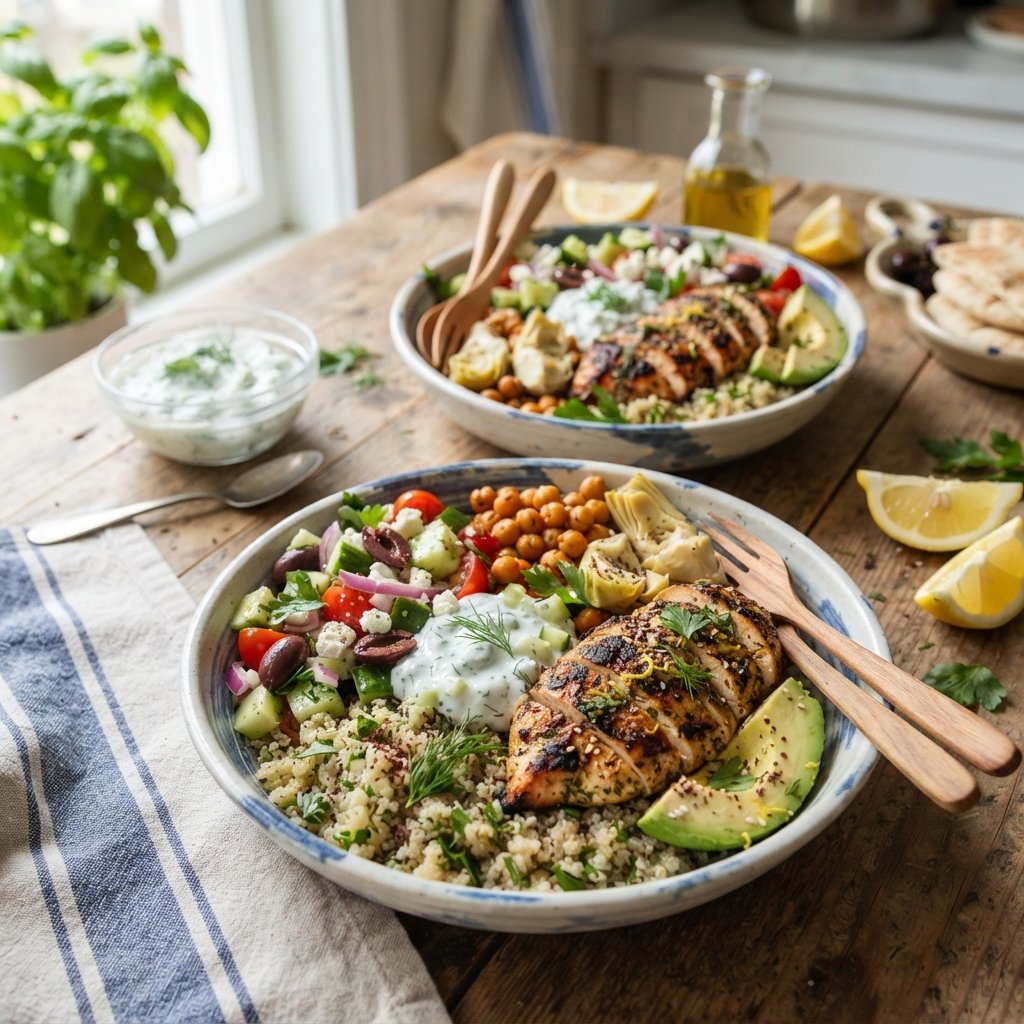
There is a specific kind of culinary magic that happens when you combine the bright, zesty punch of fresh lemon with the grassy, aromatic whisper of dill. When these flavors meet tender, marinated chicken and a bed of wholesome grains, the result is the Mediterranean Lemon-Dill Chicken Bowl. This dish is more than just a meal; it is a celebration of the vibrant, health-focused cuisine that has defined the Mediterranean basin for centuries. It represents the perfect intersection of convenience and gourmet flavor, offering a balanced plate that satisfies the palate while nourishing the body.
In a world where “fast food” often implies processed ingredients and heavy sauces, this bowl stands as a beacon of freshness. It is designed for the modern home cook who refuses to compromise on taste for the sake of speed. Whether you are meal-prepping for a busy work week, hosting a casual summer lunch, or simply craving something that feels light yet substantial, this recipe delivers. The interplay of textures—crispy cucumber, creamy tzatziki, fluffy grains, and juicy chicken—creates a sensory experience that transports you straight to a seaside taverna in Santorini or a bustling market in Istanbul.
The History
The roots of the Mediterranean Lemon-Dill Chicken Bowl are deeply embedded in the culinary traditions of Greece and Turkey. While the concept of the “grain bowl” is a relatively modern Western invention, the components have ancient lineage. In Greece, lemonato (chicken cooked with lemon) is a Sunday staple. The technique of marinating meat in acidic citrus juices and olive oil dates back thousands of years, originally serving as a method to tenderize tougher cuts of meat and preserve them in the warm Mediterranean climate before the invention of refrigeration.
Dill, known scientifically as Anethum graveolens, has been used in the region since antiquity. The Greeks called it anithon, and it was prized not just for its flavor but for its digestive properties. It was often paired with fish and yogurt-based sauces. The modern iteration of this dish combines these historical elements—the souvlaki-style chicken, the yogurt-dill sauce (a cousin to tzatziki), and the grain base (reminiscent of pilaf)—into a single vessel. This evolution reflects the global shift toward “bowl culture,” where distinct elements are kept separate yet unified by a dressing, allowing the eater to experience each flavor profile individually or mixed together.
Ingredients Breakdown
To truly master this dish, one must understand the role each component plays in the symphony of flavors. This is not a recipe where you can simply throw everything into a pot; it relies on the quality and preparation of individual elements.
The Protein: Chicken Thighs vs. Breasts
While chicken breast is the leaner option, this recipe often benefits from the use of boneless, skinless chicken thighs. Thighs have a higher fat content, which renders down during cooking to keep the meat incredibly moist and flavorful, especially when subjected to the high heat of a skillet or grill. However, if you prefer the texture of breast meat, the acidic marinade works wonders to break down the fibers, ensuring it doesn’t become dry.
The Aromatics: Lemon and Dill
Lemon: You need both the zest and the juice. The zest contains the essential oils that provide the intense floral aroma, while the juice provides the acid necessary to tenderize the meat and brighten the sauce. Always use fresh lemons; bottled juice contains preservatives that can impart a metallic, bitter aftertaste.
Dill: Fresh dill is non-negotiable here. Dried dill lacks the volatile oils that give the herb its characteristic freshness. Look for bunches with bright green, feathery fronds and avoid any that look yellowed or slimy.
The Base: Grains and Greens
The foundation of the bowl can vary. Quinoa offers a nutty flavor and a complete protein profile, making it a favorite for health enthusiasts. Brown rice provides a chewy, hearty texture that holds up well to sauces. For a lower-carb option, a bed of massaged kale or arugula works beautifully, turning the dish into a vibrant salad bowl.
The Sauce: Creamy Dill-Yogurt
The glue that holds the bowl together is the sauce. Using full-fat Greek yogurt provides a tangy richness that mimics the mouthfeel of heavy cream without the heaviness. When mixed with garlic, lemon juice, and copious amounts of dill, it becomes a cooling counterpoint to the savory, charred chicken.
Step-by-Step Recipe
Creating the perfect Mediterranean Lemon-Dill Chicken Bowl is a process of layering flavors. It begins the night before, or at least a few hours prior to cooking, with the marinade.
Phase 1: The Marinade. In a large bowl, whisk together olive oil, fresh lemon juice, lemon zest, minced garlic, dried oregano, salt, and black pepper. Add your chicken pieces to this mixture, ensuring they are thoroughly coated. The acid in the lemon juice will immediately begin to work on the proteins of the chicken. Let this rest in the refrigerator. The longer it sits, the deeper the flavor penetration, though 30 minutes is the absolute minimum.
Phase 2: The Sauce and Prep. While the chicken marinates, prepare your sauce. In a small bowl, combine Greek yogurt, chopped fresh dill, a squeeze of lemon, a clove of grated garlic, and a drizzle of olive oil. Season with salt. Cover and refrigerate to let the flavors meld. Simultaneously, cook your chosen grain according to package instructions. Fluff with a fork and stir in a little lemon zest to wake up the grains.
Phase 3: The Cook. Heat a large skillet or grill pan over medium-high heat. Add a touch of oil. Remove the chicken from the marinade (shaking off excess liquid) and sear. You are looking for a golden-brown crust, which indicates the Maillard reaction is occurring, creating complex flavor compounds. Cook until the internal temperature reaches 165°F (74°C). Let the meat rest for five minutes before slicing; this allows the juices to redistribute throughout the muscle fibers.
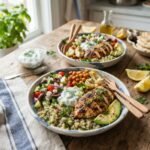
Phase 4: Assembly. To serve, place a generous scoop of grains in the bottom of a bowl. Top with sliced chicken. Arrange fresh vegetables like diced cucumbers, cherry tomatoes, and Kalamata olives around the sides. Drizzle generously with the dill-yogurt sauce and garnish with extra fresh dill and a wedge of lemon.
Tips
- Don’t Skip the Rest: It is tempting to slice the chicken immediately after taking it off the heat, but this releases all the moisture onto the cutting board. Letting it rest ensures every bite is juicy.
- Zest Before You Juice: It is significantly harder to zest a lemon once it has been cut and juiced. Always remove the zest first while the fruit is whole and firm.
- Meal Prep Friendly: This recipe is excellent for meal prep. However, store the sauce separately from the greens and grains. If the sauce sits on the salad for three days, the acidity will wilt the vegetables. Assemble the bowl fresh each day.
- Char Your Veggies: For an extra layer of flavor, throw your cherry tomatoes or slices of zucchini into the pan alongside the chicken for the last few minutes of cooking to get a nice blister.
Variations and Customizations
The beauty of the bowl format is its adaptability. Here are several ways to customize this recipe to fit dietary needs or flavor preferences:
- Vegan/Vegetarian: Swap the chicken for crispy chickpeas. Toss canned chickpeas in the same lemon-dill marinade and roast them in the oven at 400°F (200°C) until crispy. You can also use cubed firm tofu or tempeh.
- Low-Carb/Keto: Eliminate the grains entirely. Replace the rice or quinoa with cauliflower rice or a base of shredded romaine lettuce and spinach. Increase the portion of olives and avocado for healthy fats.
- Spicy Kick: The traditional Mediterranean profile is not spicy, but you can easily change that. Add a pinch of red pepper flakes to the marinade, or swirl some Harissa paste into the yogurt sauce for a North African twist.
- Grain Swap: Try using Farro or Bulgur wheat for a chewier, nuttier texture that is traditional in Turkish cuisine.
- Extra Creaminess: Add slices of ripe avocado or a crumbling of Feta cheese on top. The saltiness of the Feta pairs exceptionally well with the sweetness of the lemon.
Health Considerations and Nutritional Value
The Mediterranean Lemon-Dill Chicken Bowl is a powerhouse of nutrition, aligning closely with the principles of the Mediterranean Diet, which is consistently ranked as one of the healthiest eating patterns in the world.
Heart Health: The primary fat source is olive oil, which is rich in monounsaturated fats and antioxidants known to reduce inflammation and support heart health. The inclusion of fatty fish (if substituted) or the lean chicken provides essential omega-3 fatty acids.
Protein and Satiety: With a high protein content from the chicken and Greek yogurt, this meal promotes satiety, helping to regulate blood sugar levels and prevent mid-afternoon energy crashes. The fiber from the vegetables and whole grains further aids in digestion and gut health.
Micronutrients: This bowl is vitamin-dense. Lemons provide a massive boost of Vitamin C, essential for immune function. The dark leafy greens (if used as a base) offer Vitamin K and iron, while the garlic and onions provide prebiotic fibers that support a healthy microbiome.
Ingredients
For the Chicken and Marinade:
- 1.5 lbs (700g) boneless, skinless chicken thighs or breasts
- 1/3 cup extra virgin olive oil
- Juice and zest of 2 large lemons
- 4 cloves garlic, minced
- 1 tablespoon dried oregano
- 1 teaspoon sea salt
- 1/2 teaspoon black pepper
For the Dill-Yogurt Sauce:
- 1 cup plain Greek yogurt (full fat or 2%)
- 1/2 cup fresh dill, finely chopped
- 1 clove garlic, grated
- 1 tablespoon lemon juice
- Salt and pepper to taste
For the Bowl Assembly:
- 2 cups cooked quinoa, brown rice, or farro
- 1 cup cherry tomatoes, halved
- 1 cup cucumber, diced
- 1/2 cup Kalamata olives, pitted
- 1/4 cup red onion, thinly sliced
- Fresh parsley or extra dill for garnish
Directions
- Marinate the Chicken: In a medium bowl, whisk together the olive oil, lemon juice, lemon zest, minced garlic, oregano, salt, and pepper. Place the chicken in a resealable plastic bag or a shallow dish and pour the marinade over it. Massage to coat evenly. Refrigerate for at least 30 minutes, or up to 4 hours.
- Prepare the Sauce: While the chicken marinates, combine the Greek yogurt, chopped dill, grated garlic, lemon juice, salt, and pepper in a small bowl. Stir well, cover, and refrigerate until ready to serve.
- Cook the Grains: Prepare your chosen grain (quinoa, rice, etc.) according to the package directions. Once cooked, fluff with a fork and set aside.
- Cook the Chicken: Heat a large skillet or grill pan over medium-high heat. Add a teaspoon of oil if necessary. Remove chicken from the marinade, shaking off excess liquid. Cook for 5-7 minutes per side, or until the chicken is golden brown and cooked through (internal temperature of 165°F / 74°C).
- Rest and Slice: Transfer the chicken to a cutting board and let it rest for 5 minutes. Slice into strips or bite-sized chunks.
- Assemble the Bowls: Divide the cooked grains among serving bowls. Top with the sliced chicken. Arrange the tomatoes, cucumber, olives, and red onion around the chicken.
- Serve: Drizzle generously with the dill-yogurt sauce. Garnish with fresh herbs and serve immediately with lemon wedges on the side.
FAQ
Can I freeze the marinated chicken?
Yes, you can freeze the chicken in the marinade for up to 3 months. Thaw it in the refrigerator overnight before cooking. Note that the texture of the chicken may change slightly due to the acid in the lemon juice breaking down the fibers over a long period.
Can I use dried dill instead of fresh?
While fresh dill is highly recommended for the sauce to get that bright, grassy flavor, you can use dried dill in a pinch. Use one-third of the amount called for fresh (e.g., if the recipe calls for 3 tablespoons fresh, use 1 tablespoon dried). However, do not use dried dill for the garnish.
How long does this keep in the fridge?
The cooked components will last in an airtight container in the refrigerator for up to 4 days. As mentioned in the tips, keep the sauce and the vegetables separate from the hot grains and chicken if possible to maintain texture.
Is this recipe gluten-free?
Yes, naturally. Just ensure that you choose a gluten-free grain like quinoa or rice, and double-check that your spices and yogurt do not contain hidden gluten additives.
Summary
This Mediterranean Lemon-Dill Chicken Bowl combines zesty marinated chicken, fluffy grains, and fresh vegetables with a creamy yogurt-dill sauce for a healthy, flavor-packed meal. It is a versatile dish perfect for meal prep that brings the bright, heart-healthy tastes of the Mediterranean coast to your dinner table.